KuCoin Pay Wants Crypto to Blend into Local Payment Rails
A customer walks into a café in Peru and wants to pay with crypto. The café accepts QR payments, but it has no crypto wallet or special crypto checkout. At that point, the customer would usually need to convert the funds or choose another way to pay.
KuCoin Pay is trying to solve this problem by offering a shorter route. The customer scans the café’s existing payment code and pays from their KuCoin crypto balance. The merchant continues using the local payment system already in place.
In June, KuCoin Pay added QR-based access in Argentina and Peru. A separate rollout connected users with bKash and Nagad in Bangladesh, Mexico’s SPEI bank-transfer system, and the MTN and Airtel mobile-money networks in Zambia.
The expansion builds on KuCoin Pay’s earlier integration with Brazil’s Pix network. Its current support pages also indicate broader QR payment coverage across Southeast Asia, alongside Open CryptoPay support in Switzerland.
Together, these integrations point to a larger ambition: making crypto held in a KuCoin account as accessible for everyday payments as funds in a local payment app, even across markets with very different financial systems.
The question is whether this routing layer can turn crypto holdings into payment infrastructure people use regularly.
The Real Product Is Routing
Global crypto networks use common technical standards, while retail payments remain heavily local. A Brazilian merchant expects Pix. Consumers in Bangladesh use mobile wallets. Mexican bank transfers move through SPEI.
That fragmentation creates the last-mile problem for crypto payments. Moving a stablecoin between blockchain addresses can take seconds, yet spending that value still requires a connection to the system used by the recipient.
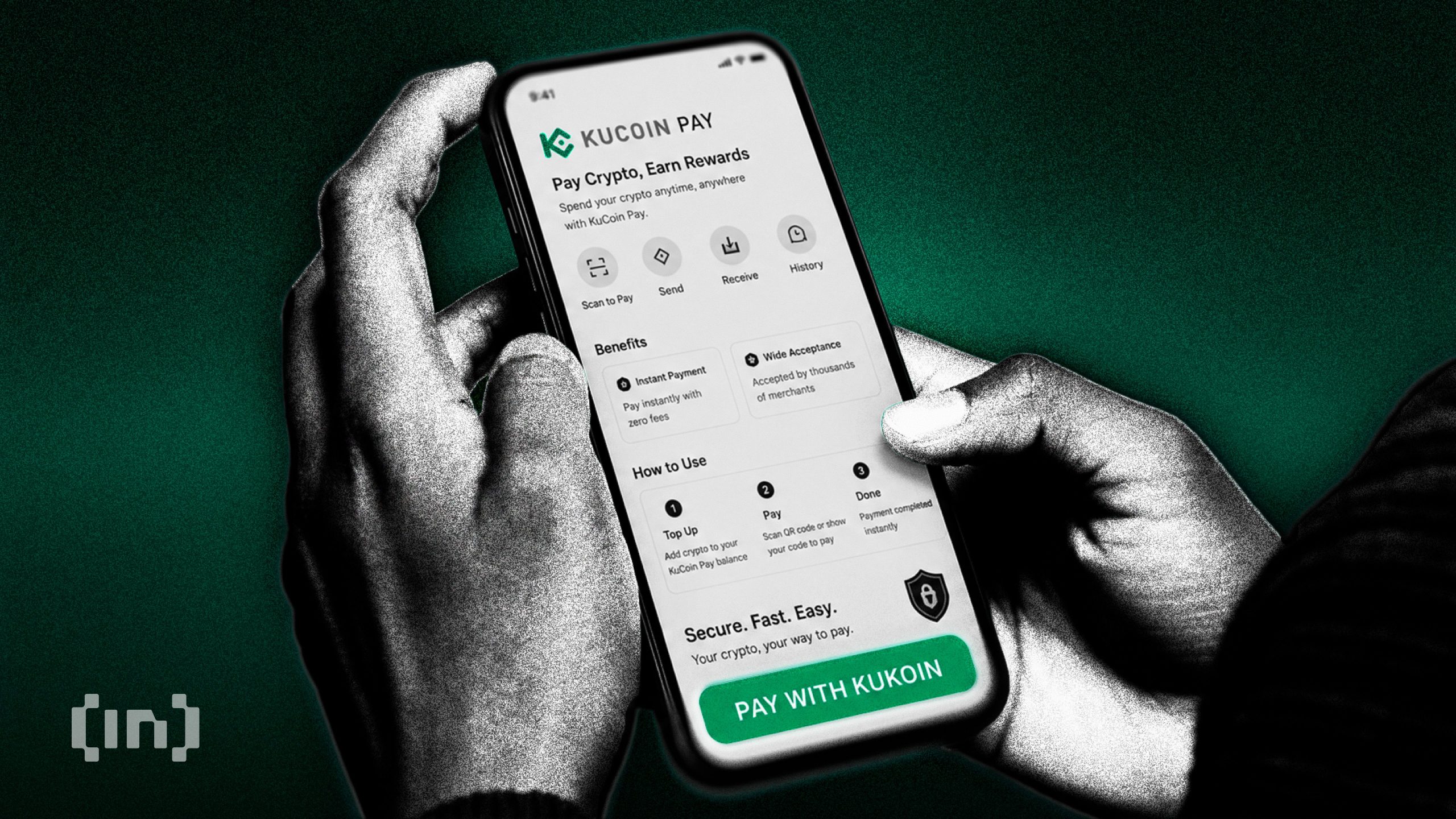
KuCoin Pay handles that translation inside one interface. In QR-driven markets, the user scans a supported national code. For local transfers, the user selects a network and enters the recipient’s account or phone details. KuCoin then routes the payment through the supported local channel.
The product supports more than 50 cryptocurrencies, including USDT, USDC, Bitcoin, and KCS. KuCoin says the service is designed to offer a simple payment experience, with instant settlement and no payment fees charged by KuCoin.
Approved refunds are returned to the user’s funding account in USDT, although individual merchants may impose their own handling charges.
This model removes blockchain addresses and network selection from the checkout experience. The local payment method remains visible while crypto operates as the funding source.
Local Rails Solve Crypto’s Distribution Problem
In 2026, there is a wider change in how people access financial services. The World Bank’s Global Findex 2025 found that 79% of adults worldwide now have a financial account.
In low- and middle-income countries, 84% own a mobile phone. Mobile money and digitally enabled accounts are already shaping how people receive funds and make payments.
Stablecoins have also reached meaningful scale. Visa estimated that stablecoin supply grew by more than 50% during 2025 to $274 billion. Its adjusted data placed annual transaction volume above $10 trillion after filtering high-frequency trading wallets and automated activity.
Consumer spending remains a much narrower market. Visa’s crypto head said in January that stablecoins still lacked merchant acceptance at scale. Much of their on-chain activity continues to involve trading, treasury movement, or transfers between crypto platforms.
KuCoin’s local-rail strategy addresses that distribution gap. Merchants can remain inside the payment systems they already use. The consumer gains a route from a crypto balance to an existing retail endpoint.
Brazil provides the clearest example. KuCoin Pay users can scan a standard Pix QR code at a participating merchant and pay from the app. The merchant does not need to display a separate crypto wallet address or introduce a new checkout process.
Replicating that experience requires country-specific integrations. Argentina’s interoperable QR network works differently from Peru’s wallet ecosystem.
Bangladesh relies heavily on mobile financial services, while Zambia’s payment market centres on mobile-money operators. The interface can look consistent even when each transaction follows a different route underneath.
A Payment Layer Between Crypto and Local Finance
KuCoin describes the system as a unified technical entry point for local payment routing. That places KuCoin Pay closer to a payment orchestration layer than a simple crypto checkout tool.
“Real-world utility will define the next phase of crypto adoption, and payments are where this shift becomes most visible,” KuCoin Managing Director Alicia Kao said in the company’s Latin America expansion announcement.
KuCard already connects digital assets with merchants through the familiar Visa and Mastercard networks. KuCoin Pay complements this card-based model by extending crypto payments into national QR systems and domestic transfer networks.
This local approach could matter most in markets where cards are less central to everyday payments. It allows KuCoin to enter payment behaviour that has already formed around bank apps, mobile wallets, or phone numbers.
The underlying infrastructure still carries traditional financial dependencies. Local liquidity must be available, compliance rules differ by jurisdiction, and payment failures must be resolved clearly. Currency conversion can also affect the final cost, even when the payment product advertises no transaction fee.
The IMF has warned that stablecoins may lower payment friction while increasing risks around currency substitution and capital-flow controls. Those questions become more important as crypto platforms connect directly with domestic payment networks.
The Next Test Is Repeat Usage
KuCoin’s announcements establish geographic coverage. The platform has reported strong growth in on-chain payment volume, with 25x order growth and 60% growth in service Partner and merchant numbers.
These figures show that crypto payments are undeniably becoming an increasingly important layer of traditional financial infrastructure.
However, the practical test will come from ordinary transactions: users repeatedly paying merchants, transferring to local accounts, or topping up mobile services without encountering delays or unclear costs. Reliable performance across different local networks will matter more than the number of countries listed.
KuCoin Pay has established a credible route from crypto balances into familiar financial systems. Its wider infrastructure claim now depends on showing that people continue using that route after the launch campaigns end.
The post KuCoin Pay Wants Crypto to Blend into Local Payment Rails appeared first on BeInCrypto.
Read moreLatest News