How Europe’s Right Wing Weaponized Crypto After Trump’s Election
Since US President Donald Trump positioned crypto as a central pillar of his campaign, political leaders across Europe have begun adopting a similar approach, seeking to attract crypto-aligned voters as the digital assets industry continues to expand.
Right-wing parties, in particular, have leaned into this strategy. Bitcoin’s non-sovereign nature and its emphasis on limited state intervention have made crypto especially appealing to conservative and libertarian leaders.
However, its potential to obscure financial flows has also made opposition leaders wary.
Trump’s Crypto Playbook Goes Global
During his 2024 campaign, Trump set a precedent by making crypto an indispensable part of his presidential agenda. The move was strategic.
Digital asset ownership has steadily increased across the United States, though its growth has been largely constrained by regulations that many in the industry viewed as stifling innovation.
At the same time, the sector proved highly lucrative, with crypto companies willing to channel millions of dollars into presidential candidates who openly supported digital assets.
Then, Trump won. Soon enough, political leaders from other regions – particularly Europe – raised their gaze and embraced a similar playbook.
The United Kingdom’s Reform Party, led by Nigel Farage, has been the most explicit example of this pivot.
Reform UK Opens Doors to Crypto
In May 2025, Reform became the first political party in the UK to accept crypto donations. Farage announced it during an appearance at the Bitcoin Conference in Las Vegas, where he was introduced as a presidential candidate.
During his speech, Farage mentioned that Reform planned on introducing a cryptoassets and digital finance bill. The legislation would seek to limit capital gains taxes on crypto to 10%.
Soon, donations from crypto investors began to flow.
In December, reports emerged that cryptocurrency investor and aviation entrepreneur Christopher Harborne had donated £9 million to the party. Harborne, a major investor in stablecoin issuer Tether, made the contribution in cash rather than in crypto.
Strong links between Farage and Trump’s inner circle also began to emerge.
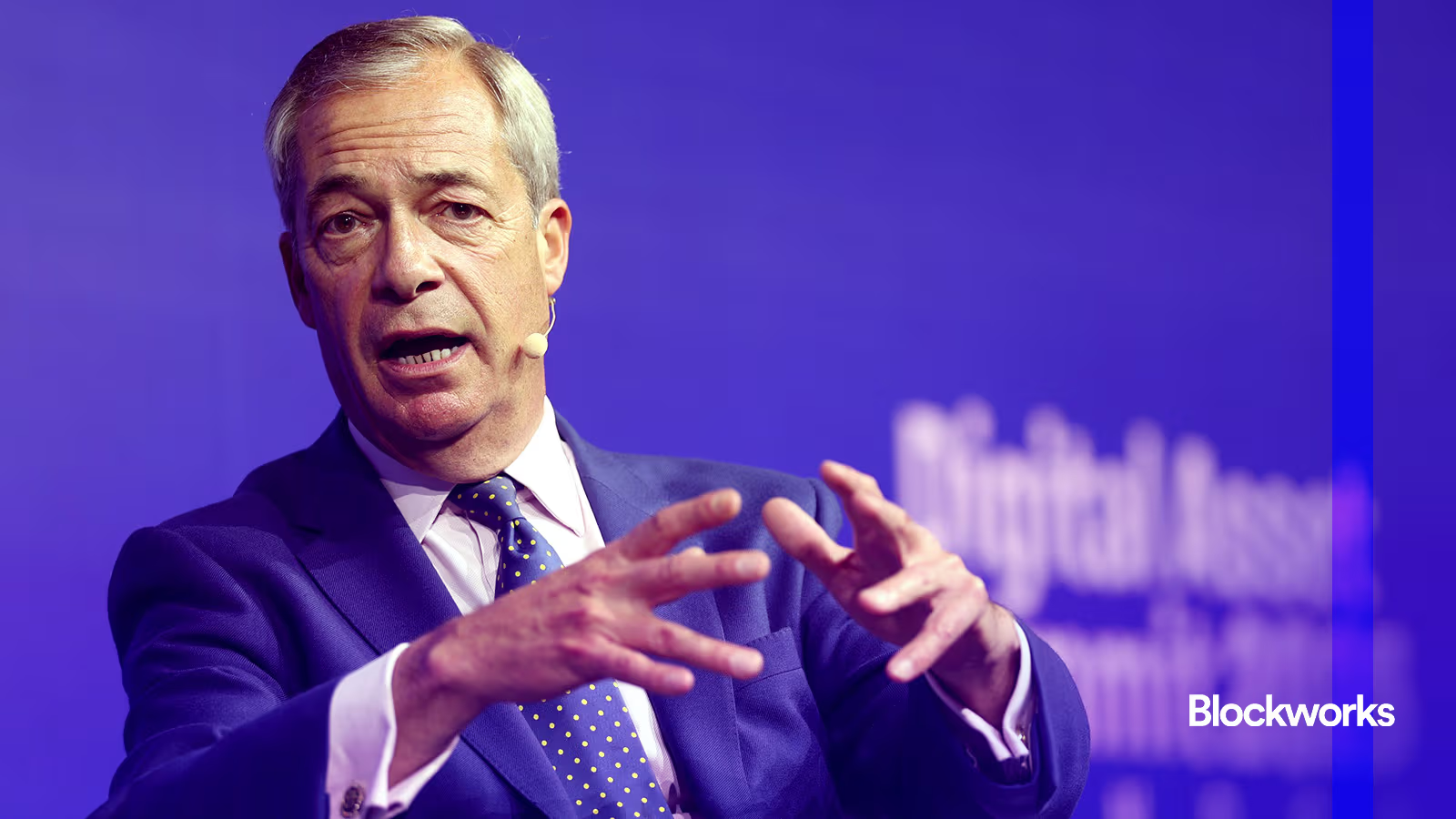
Byline Times recently reported that, last October, Farage disclosed a £30,000 payment for a speaking engagement from Blockworks Inc., a leading crypto data and information platform with links to pro-Trump crypto investment circles.
The media outlet also reported that Farage had received payments long before announcing his presidential candidacy.
According to journalist Nafeez Ahmed, David Bailey, chief executive of BTC Inc. and a senior cryptocurrency advisor to Trump, paid Farage a speaking fee through BTC Inc. Months later, the Reform leader unveiled his pro-crypto policy platform.
Though less emphatically, several of the UK’s neighboring countries have also begun to adjust their positions on the digital assets industry.
France’s Far Right Rewrites Stance on Bitcoin
Since the mid-2010s, France’s far-right has consistently ranked among the leading contenders in presidential elections, though it has yet to translate that momentum into presidential control.
Marine Le Pen, leader of the National Rally party, has been the most prominent figure on France’s far right. Her stance on Bitcoin and the broader crypto sector has shifted over time.
In 2016, she pledged to ban virtual currencies, including Bitcoin. She argued they were the product of an alliance between what she described as the “ruling elite” and the powerful Wall Street investment banking lobby.
In 2022, Le Pen shifted her position, supporting plans to regulate digital assets. By 2025, she proposed that France should create them.
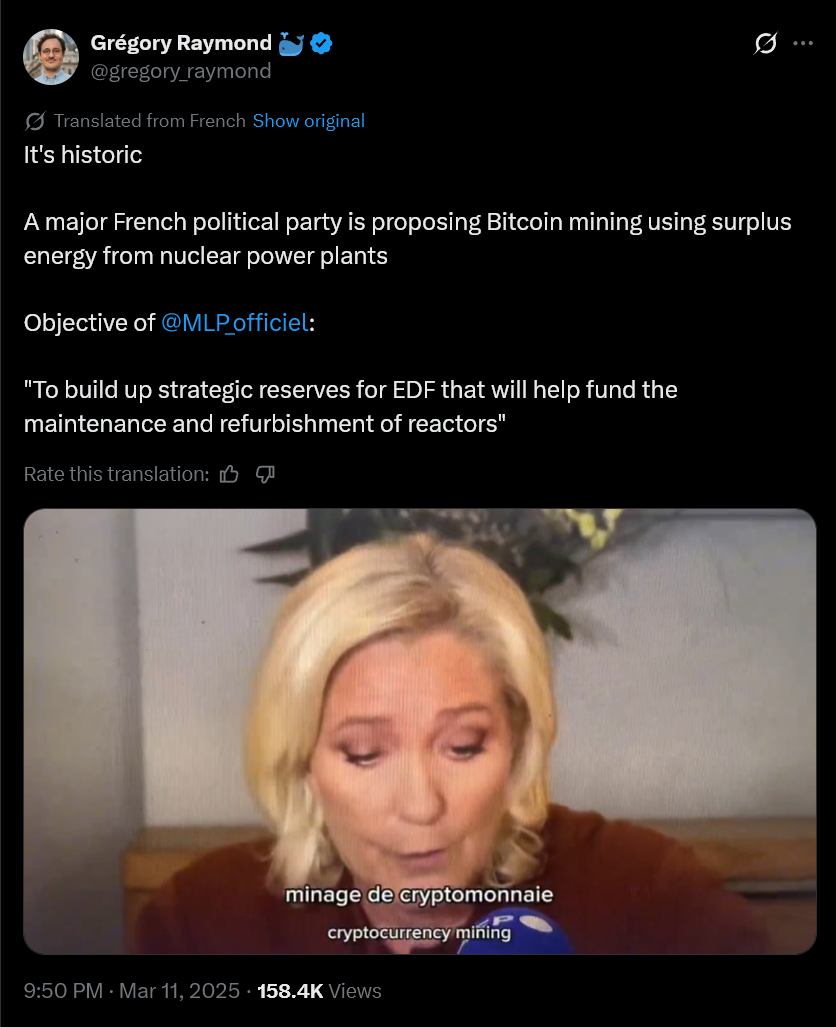
Last March, Le Pen visited the Flamanville Nuclear Power Plant, where she backed using surplus reactor electricity to mine Bitcoin.
Members of Reconquête, another far-right party in France, also surfaced the idea of creating a strategic Bitcoin reserve before the European Parliament.
According to Le Monde, the legislation was almost a carbon copy of the executive order Trump signed in March of last year.
The growing political attention to digital assets in France is not incidental. According to a 2024 report by France’s Association for the Development of Digital Assets, 12% of the population owned crypto assets, a 25% increase from the previous year.
As demonstrated in the United States during Donald Trump’s campaign, appealing to crypto-aligned voters offers politicians a pathway to an electoral base that has steadily expanded.
In other countries, efforts to embrace crypto have been even more pronounced.
Mentzen, a Crypto Pioneer in Polish Politics
Poland has experienced a renewed surge of far-right sentiment in its political landscape over recent years. Although the country is governed by a center-right coalition, it has faced growing competition from more conservative and libertarian movements.
Sławomir Mentzen, chairman of the far-right New Hope party, has emerged as a leading figure in this shift, rising sharply in popularity. A self-described libertarian, Mentzen has long expressed an interest in Bitcoin, which accounts for a significant share of his personal investment portfolio.
When Mentzen disclosed his finances in December 2023, his Bitcoin holdings were valued at around 5 million zloty, or nearly $1.5 million at the time.
This made him the largest digital asset holder among members of parliament. In a public interview two months later, Mentzen said he had invested all of his savings in cryptocurrencies as early as 2013.
His personal enthusiasm for crypto has also translated into political commitments.
When Mentzen ran for the presidency, he pledged to establish a Strategic Bitcoin Reserve if elected. He also promised to foster a supportive environment for crypto-related businesses, arguing that such policies would encourage innovation and attract international investors.
For many voters, this message resonated. According to a recent Statista report, 19% of Poland’s population, or roughly 7 million people, used cryptocurrencies in 2025. That figure is projected to rise to 7.6 million by the end of 2026.
Although Mentzen ultimately placed third in the most recent presidential election, his performance was notable.
In the first round, he secured around 2.9 million votes, or nearly 15% of the total. It marked one of the strongest showings by a far-right candidate in modern Polish presidential elections.
The post How Europe’s Right Wing Weaponized Crypto After Trump’s Election appeared first on BeInCrypto.
Read moreLatest News