Venezuela Could Be Shifting to the US Dollar: Is It Bad for Crypto?
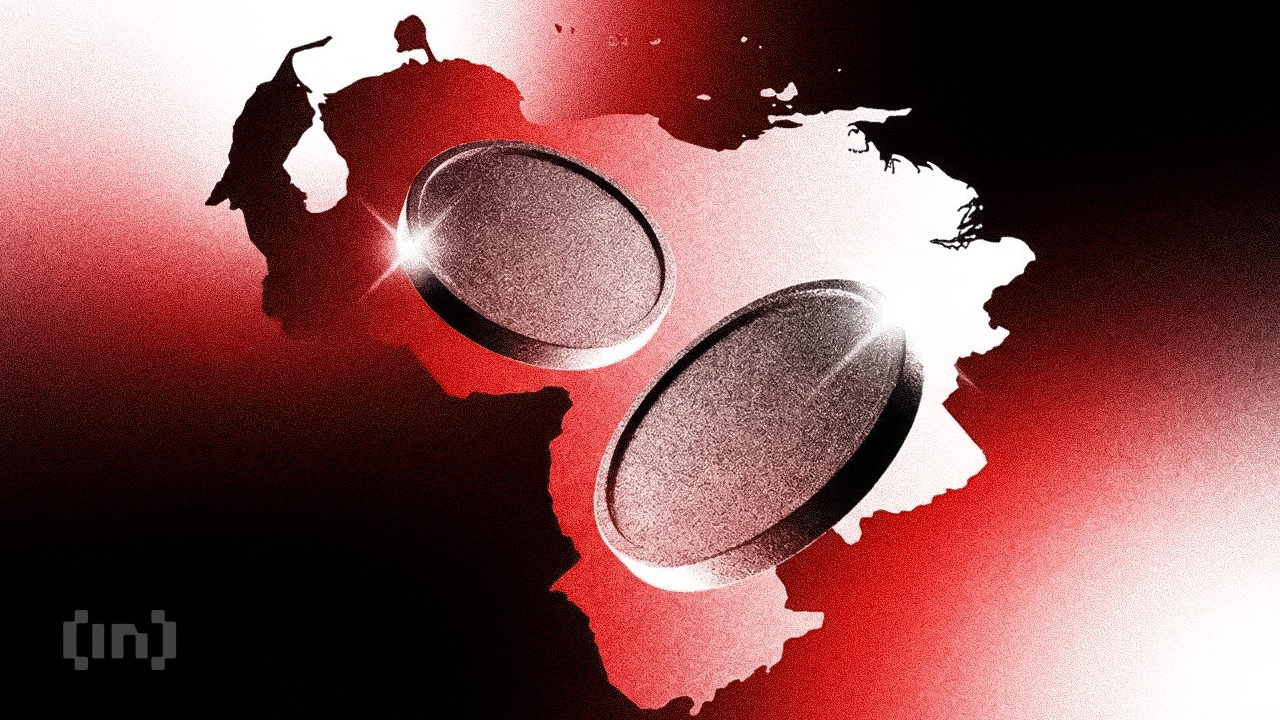
Venezuela is moving closer to formal dollarization, with economist Steve Hanke drafting a bill to abolish the bolivar. According to reports, the National Assembly appointed him as a special adviser this month.
The Johns Hopkins economist drafted a full dollarization law that would abolish the bolivar and the central bank. He puts the odds of passage at 50% to 80%.
What Hanke’s Dollarization Plan Actually Proposes
According to Fortune, Hanke is working on the project alongside Assembly member Antonio Ecarri, founder of the centrist “Lápiz” party.
This marks Hanke’s second attempt at this cure in Venezuela. In 1995 and 1996, he designed a currency board as chief economic adviser to President Rafael Caldera, a plan that failed to win a majority in the National Assembly.
The economist argues that conditions look different this time. He told Fortune that surveys show most Venezuelans already want to dump the bolivar, and many already shop in dollars even though they get paid in local currency.
His plan would shut down the central bank entirely, ending the government’s ability to print money. Inflation currently runs near 400% annually, still the highest rate in the world.
“Venezuela would be the most competitive economy in the world. The bolivar has lost 78% of its value to the U.S. dollar in the past year,” the economist said.
Follow us on X to get the latest news as it happens.
Venezuelans already live in a heavily dollarized economy in practice. Physical dollars circulate widely, though a digital alternative has quietly become even more central to daily transactions across the country.
“Taming inflation is the key to restoring stability in Venezuela, and all the other progress flows from that… Stability isn’t everything, but without stability, which means stable prices, you have nothing,” Hanke told Fortune.
Inflation has eased from the 700% rate recorded before Maduro’s capture, but it remains six times higher than Iran’s. That translates into an 8% weekly increase in the prices of eggs, beef, and rent, according to Hanke’s calculations.
Why Oil Sits at the Center of the Plan
Oil sits at the center of the diagnosis. Venezuela produces just 1.1 million barrels per day, roughly 1.3% of global output and only one-third of the 3.4 million barrels it pumped before Hugo Chávez took power in 1998.
That figure is barely 7% higher than production levels before Maduro’s ouster, despite the US Special Forces raid on January 3 that removed him. Venezuela’s external debt sits near $250 billion, roughly 150% of GDP, the fourth-highest ratio in the world.
Hanke argues that dollarization and rising oil production work together. He explains that the current instability, with inflation near 400%, makes it difficult to renegotiate that debt with creditors, including Russia, China, ConocoPhillips, and ExxonMobil.
ExxonMobil CEO Darren Woods called Venezuela uninvestable, citing the country’s history of expropriations. The government led by President Delcy Rodríguez has yet to pass laws that sufficiently protect private property rights.
Where Crypto and USDT Fit Into the Picture
Venezuela’s retail crypto volume reached $17.9 billion in the first quarter of 2026, according to TRM Labs. USDT dominated that market, accounting for 90.2% of all Binance P2P listings paired with the bolivar.
As of August 21, USDT trades near 919 bolivars on major peer-to-peer platforms. The official Central Bank rate sits closer to 780, leaving a gap of nearly 18% between the two.

That crypto dollar rate is the one most Venezuelans actually rely on daily. Stablecoins function less as speculation and more as survival tools, protecting purchasing power where banking infrastructure falls short.
In the short term, demand for USDT will likely stay strong. People and businesses will continue to prefer a liquid, instantly transferable dollar while physical cash and banking infrastructure catch up during any transition.
Over the longer term, successful dollarization could reduce the urgency of using crypto purely as an inflation hedge. Still, USDT’s advantages, speed, low remittance costs, and 24/7 availability are unlikely to disappear.
If Hanke’s plan succeeds, crypto would stop functioning as an emergency lifeline. The digital-dollar infrastructure Venezuelans already depend on daily would likely remain a permanent feature regardless.
Subscribe to our YouTube channel to watch leaders and journalists provide expert insights.
The post Venezuela Could Be Shifting to the US Dollar: Is It Bad for Crypto? appeared first on BeInCrypto.
Read moreLatest News