AI Bubble Fears Grow as Big Tech Allegedly Pays Itself in Cloud Loop
Big Tech’s $2 trillion AI gold rush is hiding a structural flaw. Critics say the giants are quietly paying themselves through their own cloud bills, igniting fresh AI bubble fears that increasingly echo the dot-com era.
Latest corporate filings show OpenAI and Anthropic alone anchor over half of the roughly $2 trillion in future cloud commitments held by Microsoft, Amazon, Google, and Oracle. This leaves four trillion-dollar companies leaning on two unprofitable startups.
The Cloud Loop That Pays Itself
Critics call the mechanism a round-trip funding loop. A tech giant writes a billion-dollar check to an AI startup. The contract then forces that same money straight back, in the form of cloud rent. The cash never leaves the building.
Microsoft’s $13 billion stake in OpenAI is the textbook case. The investment landed largely as Azure cloud credits. OpenAI fed those credits into training models, and Microsoft turned around and booked the consumption as fresh commercial revenue.
OpenAI’s annual cloud bill has reportedly ballooned past $60 billion. The company’s actual revenue sits closer to $25 billion.
Subscribe to our YouTube channel to watch leaders and journalists provide expert insights
Anthropic plays the same hand with Amazon. The Claude developer spent $2.66 billion on Amazon Web Services in nine months, roughly every dollar it earned.
“The entire AI boom might be built on fake revenue,” remarked analyst Bull Theory.
The pattern echoes 2001, when Global Crossing and Qwest Communications swapped fiber-optic capacity to fabricate sales.
Qwest eventually erased $1.4 billion in fictitious income, and Global Crossing went bankrupt. The 2026 version stays fully legal under current accounting rules.
Paper Profits Are Doing the Heavy Lifting
The second leg of the loop sits on the income statement. Every fresh funding round for an AI startup lets its Big Tech backer mark up the investment and drop the paper gain straight into net income.
Alphabet posted a record $62.6 billion profit in Q1 2026. About $28.7 billion of that figure came from a markup on its Anthropic stake, according to its filing.
Amazon mirrored the trick. Roughly $16.8 billion of its $30.3 billion in net income tracked back to the same Anthropic revenue story, according to Fortune’s analysis.
Behind the headline profit, Amazon’s free cash flow cratered 95% to $1.2 billion. The company poured $44.2 billion into physical data centers in the same quarter.
Microsoft now carries 49% of its $627 billion future backlog tied to OpenAI alone. Oracle leans harder still, with 54% of its $553 billion pipeline riding on that same single customer.
Real Companies Are Already Hitting the Wall
The bigger problem starts the moment AI leaves the protected loop and lands in a budget meeting. Ordinary companies cannot recycle infrastructure spending into their own revenue, and the invoices are arriving fast.
Uber torched its full 2026 AI coding budget by April after handing Anthropic’s Claude Code and Cursor to thousands of engineers. Some staff burned $500 to $2,000 in monthly API charges each.
Microsoft, despite a multi-billion Anthropic partnership, ordered its own employees to stop using Claude Code internally after token consumption had become unsustainable, according to Fortune’s report.
Nvidia’s vice president of applied deep learning Bryan Catanzaro admitted his team now spends more on compute than on human salaries.
“For my team, the cost of compute is far beyond the costs of the employees,” Catanzaro recently told Axios.
Cheaper chips may not rescue the math. Lower token prices tend to invite heavier agentic workloads, and enterprise AI spending may keep climbing even if hardware costs fall sharply.
The AI Bubble Enters Its Prove-It Phase
The market is no longer asking whether AI can grow. It is asking whether AI can pay for itself.
“The first companies to actually use AI at scale are not able to afford it,” one analyst remarked.
Index funds and retirement accounts have been dragged deeper into a tight cluster of trillion-dollar names whose AI-linked profits hinge on a handful of unprofitable startups.
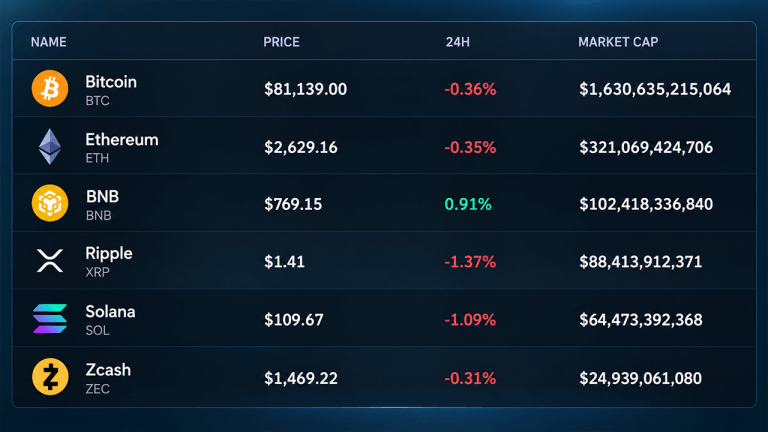
Crypto investors hold a direct stake. Bitcoin (BTC) hit a correlation with Nasdaq of 0.75 in January 2026,

This means any unwind of the Nvidia and OpenAI trade likely ripples straight into digital assets. AI tokens, already volatile, would feel the first blow.

The falling chip prices, agentic adoption, or cold accounting math winning the next round is now in the balance, with the AI boom officially entering its prove-it phase.
Notably, mainstream finance has already taken notice, with Fidelity’s own AI bubble framework listing five warning checks.
“We think 5 indicators may offer directional insights into future AI-driven market and economic trends,” Fidelity listed.
- The rate of aggregate earnings growth
- Aggregate earnings quality
- Valuations vs. history
- The affordability/sustainability of corporate capex spending, and
- The interest-rate cycle
Big Tech’s Q1 filings already trip two of them, earnings quality and capex affordability.
The boom may not get the chance to prove anything if the warning lights keep multiplying.
The post AI Bubble Fears Grow as Big Tech Allegedly Pays Itself in Cloud Loop appeared first on BeInCrypto.
Read moreLatest News