Yaroslav Ivanov at Consensus 2026: Crypto’s Institutional Era Became Impossible to Ignore
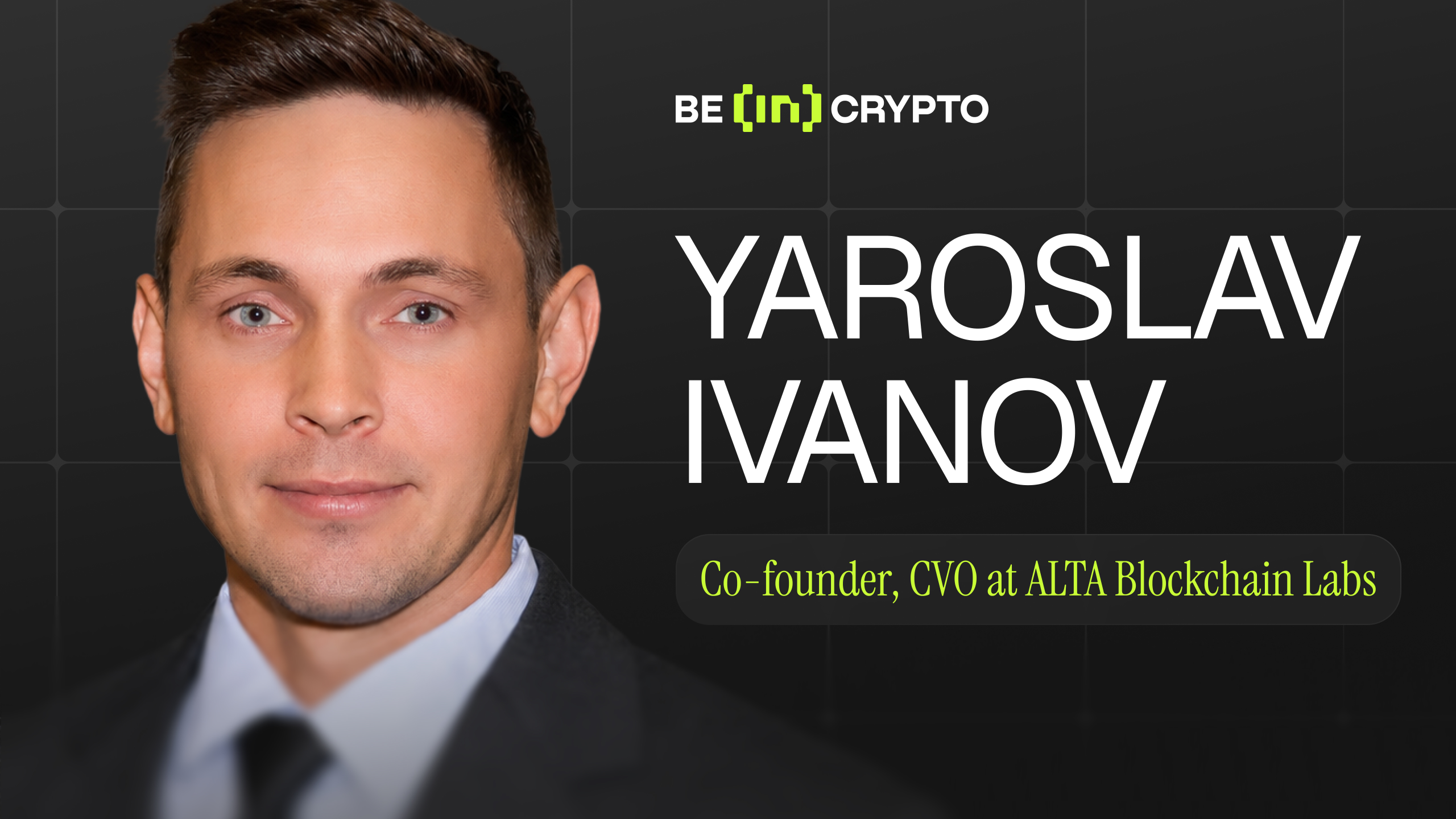
Having worked across blockchain and digital asset ecosystems since 2015, Yaroslav Ivanov, Co-Founder and Chief Visionary Officer of ALTA Blockchain Labs, has witnessed crypto evolve from a niche movement into a sector increasingly intertwined with global finance, a shift that became especially evident at Consensus Miami 2026.
Ivanov is a strategic executive working closely with Web3 founders through ALTA Blockchain Labs, advising on tokenization and liquidity strategy, go-to-market execution, and ecosystem development.
Through his work with both founders and institutional investors, he observes how capital flows and builder sentiment evolve across market cycles. The event brought together senior voices from digital assets, banking, asset management, technology, and policy, with ALTA Blockchain Labs participating as a media and community partner of Consensus 2026.
ALTA sits at the layer where Web3 projects transition into broader liquidity markets.
For Ivanov, the atmosphere showed how much the industry has changed. The early crypto conference image of retail excitement, experimental culture, and chaotic builder energy was still visible, but it no longer defined the room.
The strongest presence came from banks, asset managers, public companies, policy voices, and technology providers speaking about tokenization, regulated settlement, stablecoins, and institutional adoption.
“The scale and institutional presence this year is impressive,” Ivanov said. “It reflects how seriously global finance is beginning to treat digital assets.”

The Rise of Institutional Crypto
Crypto’s new audience is more formal, more corporate, and more connected to existing financial power.
The Wall Street Journal captured this mood in its coverage of Consensus Miami, describing a more corporate atmosphere at the event, with representatives from major banks including JPMorgan Chase and Citigroup.
Its phrase “Lamborghinis Out, Suits In” pointed to a visible cultural change around one of crypto’s biggest annual gatherings.
For Ivanov, this creates a more complicated question than simple “maturity.” Institutional adoption brings capital, legitimacy, liquidity, and a larger market. It also forces the industry to decide which parts of its original culture deserve protection.
Crypto was built around distrust of concentrated financial control. Today, many institutions once skeptical of digital assets are entering the sector with large balance sheets, regulated products, and established client networks.
“Institutional influence over crypto is inevitable,” Ivanov said. “The key is to preserve the authenticity of decentralization and the mission laid out by Satoshi.”
Adoption Brings Pressure
Crypto’s institutional phase can support growth, but adoption alone does not preserve openness, self-custody, or permissionless innovation.
A market can grow while its original purpose becomes less visible.
This tension ran through Consensus 2026, where tokenized securities, stablecoin settlement, bank-grade custody, regulatory alignment, and institutional distribution dominated many discussions.
Meanwhile, at side events, founder meetings, informal gatherings, and community conversations around Miami still focused on networks, applications, user ownership, and mass participation outside traditional finance.
The result was a collision between two versions of the same industry.
Bullish Brings Public Equity Onchain
One of the strongest examples came from Bullish. During Consensus Miami 2026, the company announced plans to let shareholders hold BLSH ordinary shares as tokens on Solana. Bullish described the launch as the first full tokenization of an NYSE-listed company’s equity cap table, administered by Equiniti, its SEC-registered transfer agent.
This gave the institutional conversation a concrete example. Tokenization now reaches public-company ownership records, transfer agents, shareholder visibility, settlement timing, and regulated market operations.
For founders, it validates blockchain as a technology for financial markets. It also shows how quickly crypto language can be absorbed into institutional design.
Solana and the Speed of Open Networks
Solana’s presence at Consensus added another angle to the same discussion. Ivanov met with Anatoly Yakovenko, Co-Founder of Solana Labs, during the event.
Yakovenko’s public comments at Consensus focused on the advantages global blockchain networks may have over companies built around regulated domestic markets. He made the point that crypto-native teams operate globally and can adapt faster than firms tied to legacy market structures.

This idea sits close to the heart of the current debate. Traditional finance is entering crypto because the technology has become too useful to ignore. Crypto-native networks still move faster because they were built with different assumptions from legacy finance.
The next stage of competition may be more about open networks challenging the operating models of traditional markets.
The Builder Spirit Around the Edges
Consensus 2026 showed an industry large enough for major institutions to take seriously, but still young enough for its future to remain unsettled.
Institutional finance wants efficiency, settlement speed, new products, and access to tokenized markets. Crypto-native founders still speak about sovereignty, user ownership, transparency, and global participation.
The risk for crypto is that institutional language becomes the dominant language of success. If the industry measures progress only through ETFs, tokenized cap tables, bank partnerships, and regulated liquidity, the users and builders who carried crypto through earlier years are more easily overlooked.
At the same time, institutional participation brings distribution, compliance experience, and liquidity. These forces can make digital assets easier to use globally. The challenge is accepting institutional growth while preserving crypto’s independent foundation.
Crypto Enters Wall Street’s Room
Consensus Miami 2026 did not resolve the tension between institutional adoption and crypto’s original builder culture, but it did make it harder to ignore.
For Ivanov, the most important lesson came from the contrast between the official program and the surrounding community. Inside the main venue, crypto looked increasingly like a financial market industry.
Around the edges, the original builder spirit remained alive through side events, founder conversations, and communities still focused on open participation.
This contrast may define the next era of digital assets. Crypto has, indeed, entered the room with Wall Street.
The post Yaroslav Ivanov at Consensus 2026: Crypto’s Institutional Era Became Impossible to Ignore appeared first on BeInCrypto.
Read moreLatest News