World War 3 Is Trending in Crypto — But Markets Aren’t Acting Like It
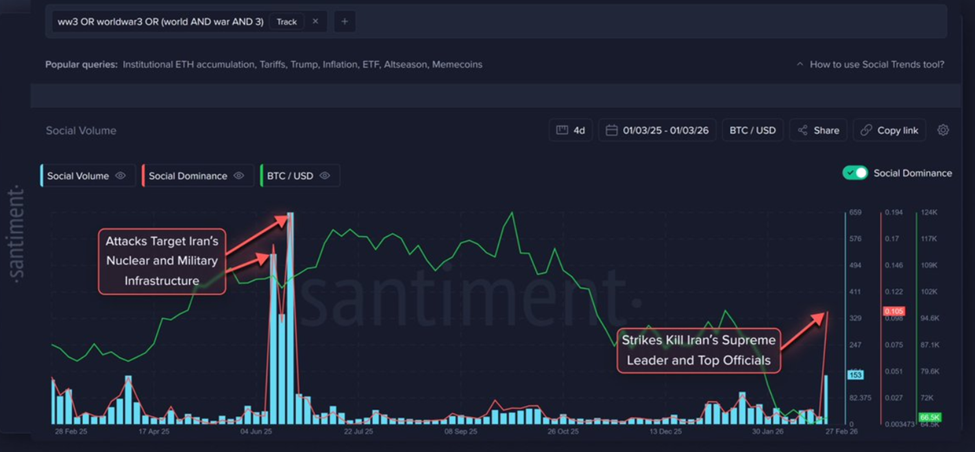
On-chain analytics firm Santiment highlights surging social media discussions about “World War 3” within crypto communities, reaching their highest level since June 2025.
Coming against the backdrop of coordinated US-Israel attacks against Iran, it suggests crypto traders are bracing for the unthinkable, at least online.
World War 3 Trends Across Crypto as US–Israel–Iran Conflict Escalates
The spike comes as tensions between the United States, Israel, and Iran intensify following coordinated strikes launched last week, and subsequent retaliatory missile and drone attacks across the Gulf region.
The renewed escalation has revived memories of last year’s June 13–24 conflict, when Israel struck Iranian nuclear and military facilities, prompting direct retaliation.
The U.S. assisted in intercepting Iranian attacks and later conducted its own strikes. Iran responded with missile and drone assaults, including targeting a U.S. base in Qatar, before a ceasefire was reached on June 24.
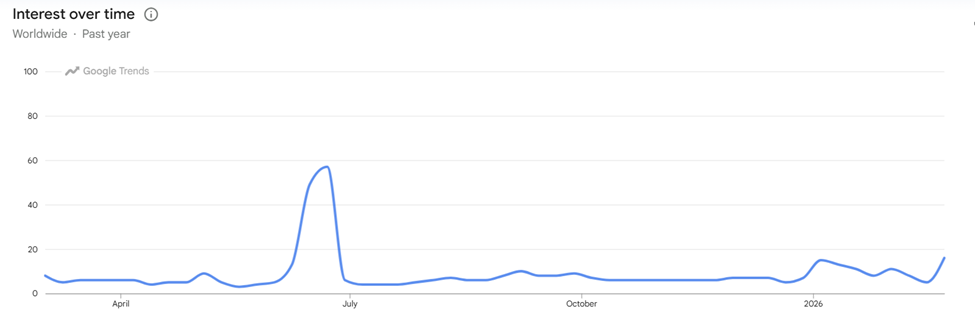
It explains why “World War 3” searches on Google Trends are currently surging toward levels last seen in June 2025.
In the same tone, Santiment noted that the uncertainty surrounding the current fighting, combined with the memory of the previous 12-day confrontation, has amplified fear online.
Social media users are increasingly framing the present situation as a potential precursor to a broader global war.
Yet traditional markets are not behaving as though a world war is imminent.
Markets Shrug Off WW3 Fears as On-Chain Data Signals “Zero Panic”
Macro commentary outlet The Kobeissi Letter pushed back on the narrative, arguing that futures markets are far from pricing in a systemic event.
Oil initially gapped higher but has already erased nearly half of that move. The S&P 500 is down less than 1%, gold has gained roughly 2%, and Bitcoin has even turned positive on the day.
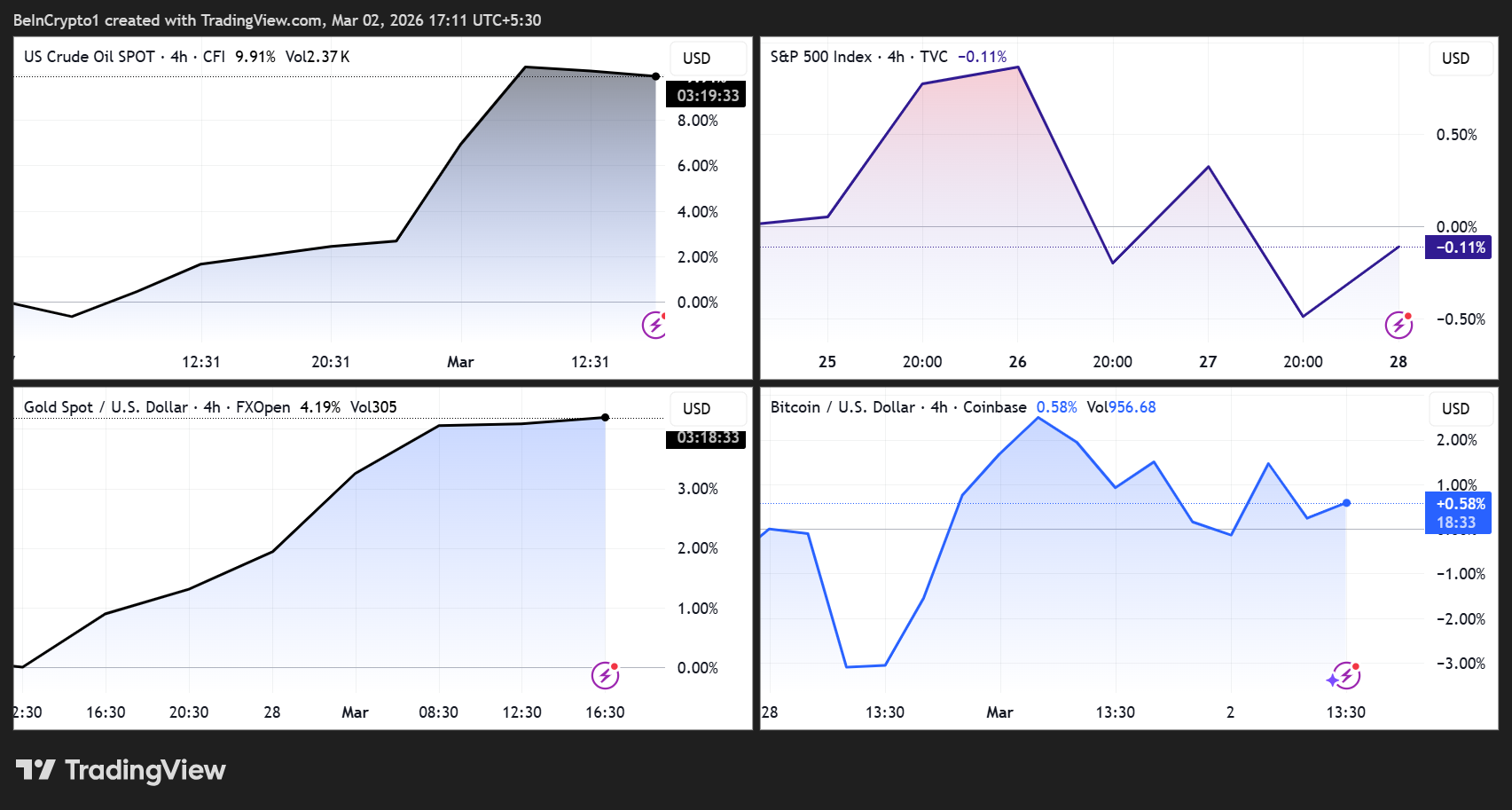
“Don’t panic. The dust will settle,” the outlet stated, highlighting the disconnect between online rhetoric and actual price action.
Market analyst Kyle Doops suggested that while oil is drawing headlines, gold may offer a more meaningful lens.
During past stress cycles — World War I, World War II, and the inflationary 1970s — gold’s share of global equities expanded significantly.
Today, despite record global debt levels and rising geopolitical tensions, that share remains well below historical extremes.
Within crypto-native circles, sentiment is more divided. Some traders argue that retail participants tend to panic first, while larger players accumulate quietly behind the scenes.
“Volatility is baked in,” one user wrote, suggesting that charts often reflect emotion before reality.
On-chain data appears to support the calmer interpretation.
CryptoQuant Data Shows Seller Exhaustion as Short-Term Holders Refuse to Capitulate
Meanwhile, according to blockchain analytics firm CryptoQuant, Bitcoin’s short-term holders, who are typically the most reactive cohort, are not rushing for exits.
CryptoQuant’s Short-Term Holder P&L to Exchanges metric, which tracks loss-driven selling from recent buyers, shows that sell-side pressure has been fading since the February 5–6 capitulation event.
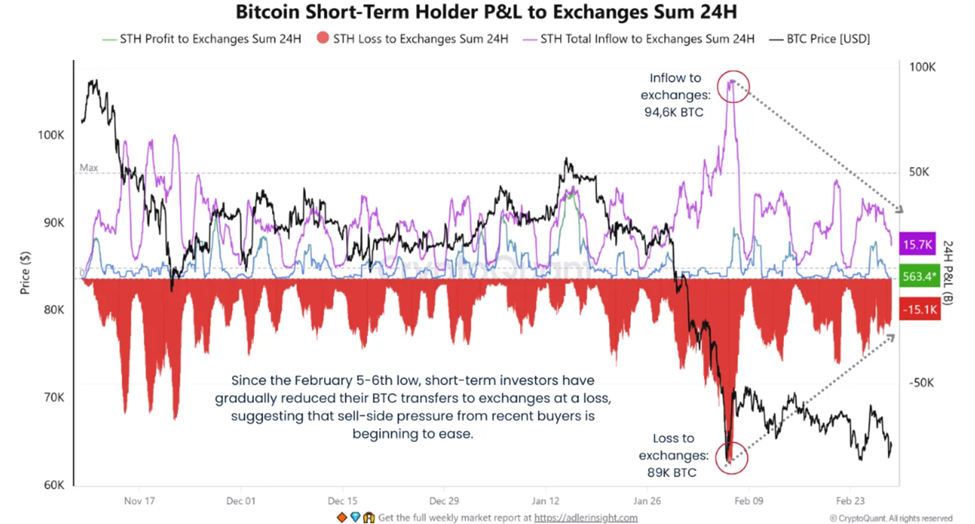
Notably, this was when roughly 89,000 BTC were sent to exchanges at a loss within 24 hours. Since then, loss-driven inflows have progressively declined.
Despite Bitcoin dipping toward the $63,000–$64,000 range during the latest geopolitical escalation, there has been no meaningful spike in exchange inflows from short-term holders.
“No panic profit-taking, no loss capitulation,” the firm observed.
The shift suggests that much of the recent liquidation pressure may already have been absorbed. Historically, markets tend to stabilize once weaker hands finish selling.
Crypto social media may be pricing in World War III. However, Bitcoin, gold, equities, and even oil appear to be pricing in contained escalation.
The key signal ahead will be whether short-term holder inflows remain muted. If panic selling stays absent, the current wave of fear may prove to be another sentiment spike rather than the start of systemic unraveling.
The post World War 3 Is Trending in Crypto — But Markets Aren’t Acting Like It appeared first on BeInCrypto.
Read moreLatest News