Who Was Crypto Designed For? An Expert Argues It’s Not Humans
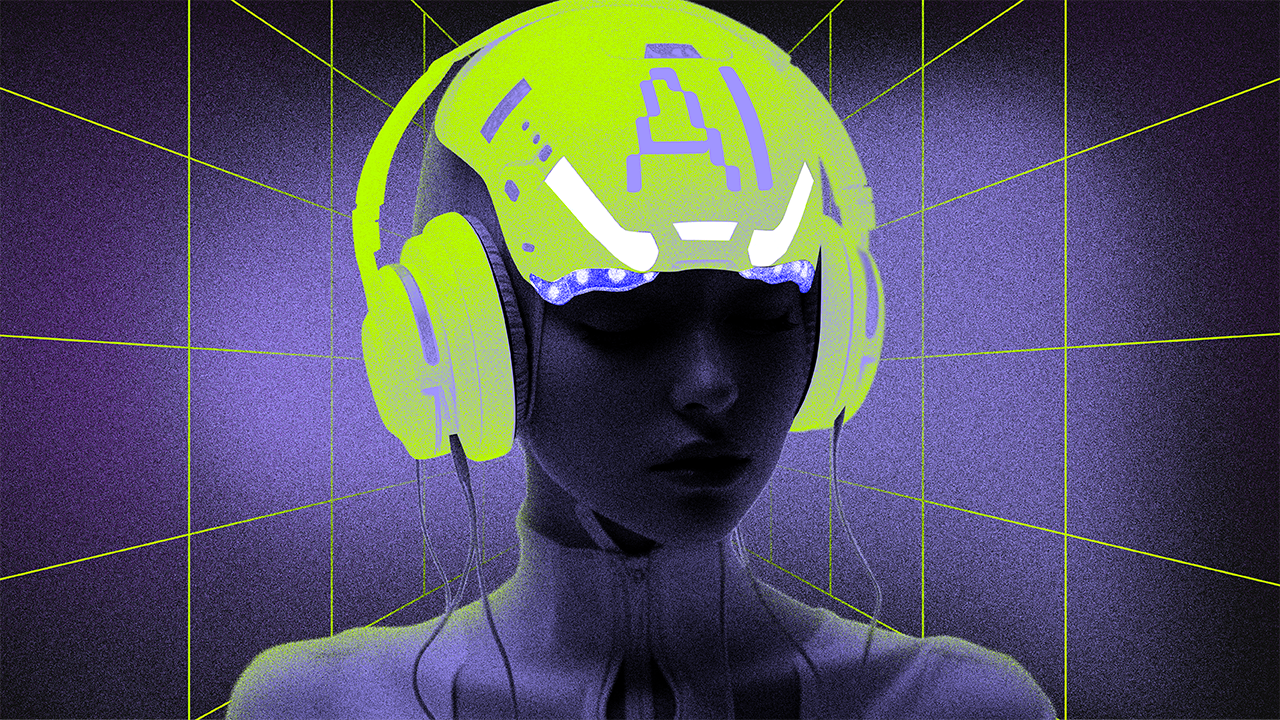
Haseeb Qureshi, managing partner at Dragonfly, argues that crypto’s persistent friction stems from a deeper mismatch: its architecture appears better aligned with artificial intelligence (AI) agents.
In his view, many of crypto’s perceived failure modes are not design flaws but signals that humans were never the ideal primary users.
The Human-Crypto Disconnect
In a detailed post on X, Qureshi argued that a fundamental divide exists between human decision-making and blockchain’s deterministic architecture. He said the early vision of the industry imagined a world where smart contracts would substitute legal agreements and courts, with property rights enforced directly on-chain.
That shift, however, has not materialized. Even crypto-native firms such as Dragonfly still rely on conventional legal contracts.
“When we sign a deal to invest into a startup, we don’t sign a smart contract. We sign a legal contract. The startup does the same. Neither of us are comfortable doing the deal without a legal agreement…In fact, even in the cases where we have an on-chain vesting contract, there’s usually also a legal contract in place,” he said.
According to Qureshi, the issue is not technical failure but social misalignment. Blockchain systems function as designed, yet they are not structured around human behavior and error. He also contrasted this with traditional banking, which has evolved over centuries to account for mistakes and misuse.
“The bank, terrible as it is, was designed for humans,” he added. “The banking system was specifically architected with human foibles and failure modes in mind, refined over hundreds of years. Banking is adapted to humans. Crypto is not.”
He added that long cryptographic addresses, blind signing, immutable transactions, and automated enforcement do not align with human intuition about money.
“That’s why in 2026, it’s still terrifying to blind sign a transaction, to have stale approvals, or to accidentally open up a drainer. We know we should verify the contract, double-check the domain, and scan for address spoofing. We know we should do all of it, every time. But we don’t. We’re human. And that’s the tell. It’s why crypto always felt slightly misshapen for us,” the executive remarked.
AI Agents: Crypto’s True Natives?
Qureshi suggested that AI agents may be more naturally suited to crypto’s design. He explained that AI agents do not fatigue or skip verification steps.
They can analyze contract logic, simulate edge cases, and execute transactions without emotional hesitation. While humans may prefer the legal systems, AI agents may favor the determinism of code. According to him,
“In that sense, crypto is self-contained, fully legible, and completely deterministic as system of property rights around money. It’s everything an AI agent could want from a financial system. What we as humans see as rigid footguns, AI agents see as a well-written spec…Even legally, our traditional monetary system was designed for human institutions, not AIs.”
Qureshi forecasted that the crypto interface of the future will be a “self-driving wallet,” entirely mediated by AI. In this model, AI agents manage financial activities on behalf of users.
He also suggested that autonomous agents could transact directly with each other, positioning crypto’s always-on, permissionless infrastructure as a natural foundation for a machine-to-machine economy.
“I think it’s this: crypto’s failure modes, which always made it feel broken for humans, in retrospect were never bugs. They were simply signs that we humans were the wrong users. In 10 years, we will look back at amazement that we ever subjected humans to wrestle with crypto directly,” Qureshi stressed.
Still, he cautioned that such a shift would not occur overnight. Technological systems often require complementary breakthroughs before reaching mainstream relevance.
“GPS had to wait for the smartphone. TCP/IP had to wait for the browser,” Qureshi noted. “For crypto, we might just have found it in AI agents.”
Recently, Bankless founder Ryan Adams also argued that crypto adoption has stalled due to poor user experience. However, he suggested that what appears to be “bad UX” for humans may actually be optimal UX for AI agents.
Adams predicted that billions of AI agents could eventually drive crypto markets beyond $10 trillion.
“In a year or two there’ll be billions of agents, many with wallets (then a year later they’ll be trillions). The “AiFi narrative” is underground like defi was in 2019. The dry tinder is quietly collecting but at some point it will ignite. No one is paying attention to crypto now because price is down…but i believe AI agents will scale to trillions of crypto wallets. AiFi is the next frontier of DeFi,” the post read.
The machine-native crypto thesis is powerful, but real constraints remain. AI agents may transact autonomously, yet liability still ultimately rests with humans or institutions, keeping legal systems relevant.
Deterministic smart contracts reduce ambiguity but do not eliminate exploits, governance failures, or systemic risk. Lastly, an argument could also be made that if AI becomes the primary interface, crypto may fade into backend infrastructure rather than function as a parallel financial order.
The post Who Was Crypto Designed For? An Expert Argues It’s Not Humans appeared first on BeInCrypto.
Read moreLatest News