Liquidity 2026: Where Global Institutions Converged on the Future of Digital Assets and TradFi
From 2023 to 2026, from Hong Kong to a global stage, institutions from around the world convened once again. As the next decade of digital assets unfolds, LTP looks ahead alongside the industry.
What does it feel like to observe—at close range—the front-line pulse of digital assets and traditional finance (TradFi) amid market volatility?
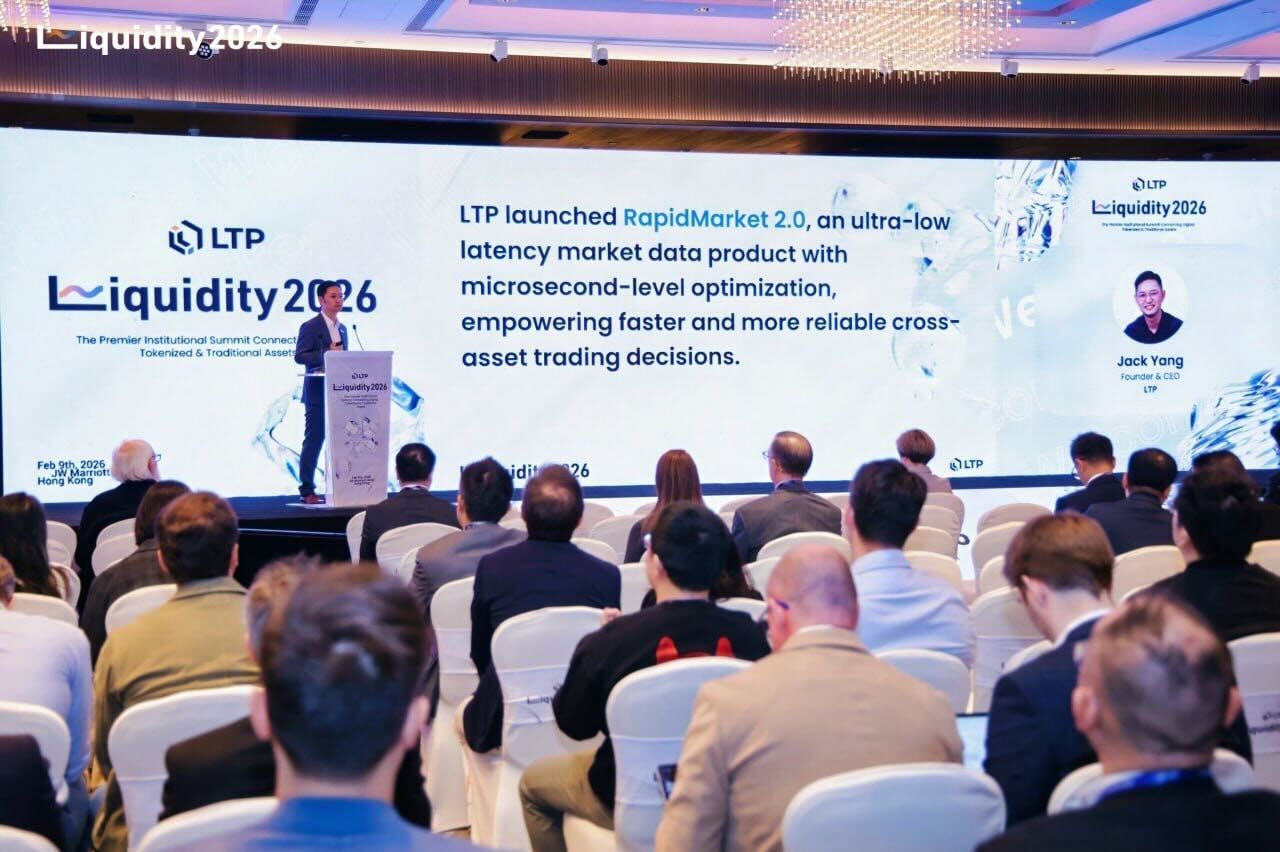
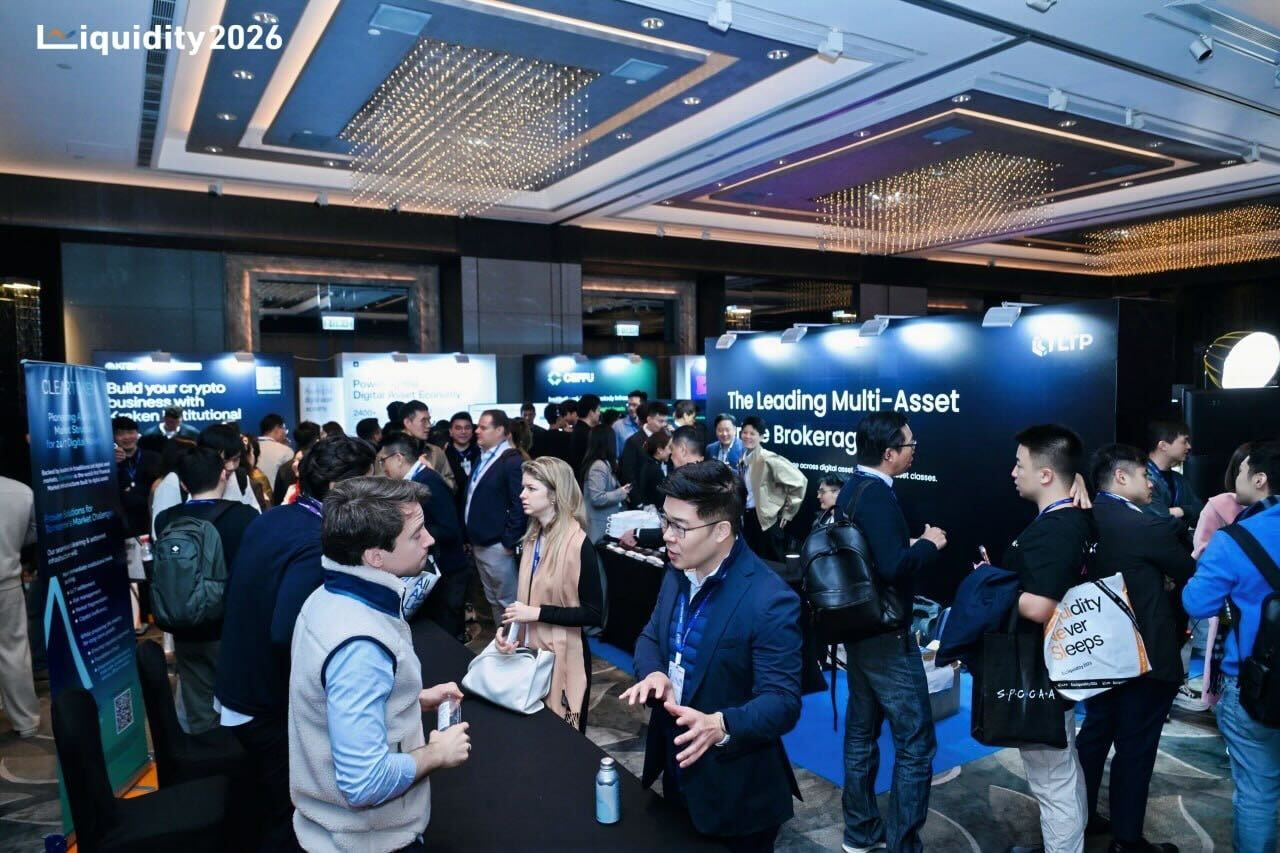
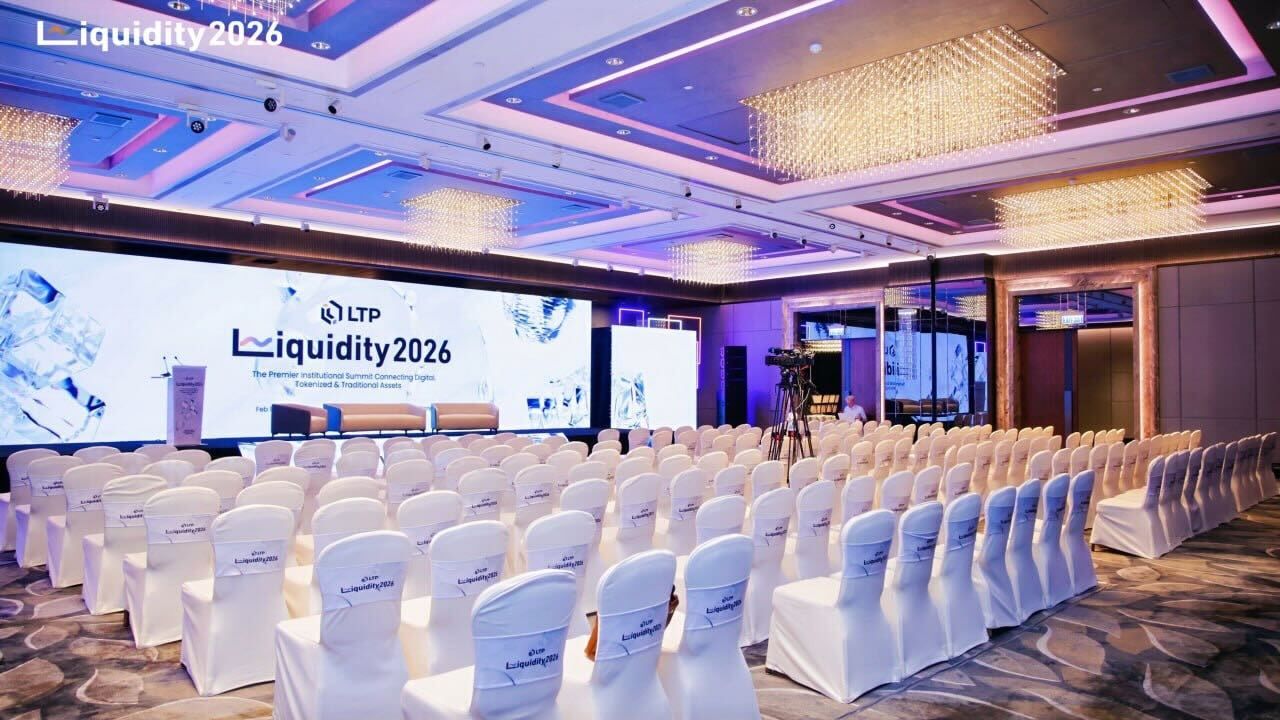
On Feb. 9, 2026, Liquidity 2026, the annual flagship institutional digital asset summit hosted by LTP Hong Kong, concluded successfully in Hong Kong. Now in its fourth consecutive year, the event once again brought together senior representatives from hedge funds, market makers, high-frequency trading firms, family offices, asset managers, exchanges, custodians, banks, and technology service providers, marking another milestone in the accelerating convergence of digital assets and traditional financial markets.
Throughout the full-day agenda, the summit featured keynote addresses, fireside chats, and in-depth roundtable discussions. Speakers and participants engaged in rigorous exchanges around the evolution of the global financial system, the rise of tokenization, and the rapid integration of multi-asset ecosystems—exploring what new opportunities and new paradigms may emerge as institutional adoption deepens.
As the summit drew to a close, a clear consensus emerged across diverse perspectives: at a turning point in the reshaping of the global financial landscape, infrastructure development, regulatory dialogue, and cross-institutional collaboration will be the critical variables shaping the industry’s sustainable growth.This was not merely a forum for ideas, but a defining step in the digital asset industry’s progression toward standardization, institutionalization, and mainstream relevance.
Full Agenda Highlights and Key Takeaways
At Liquidity 2026, LTP convened global experts to examine the future of institutional digital asset markets through multiple lenses—including core infrastructure, liquidity connectivity, tokenization, and emerging market paradigms.
Multi-Asset Trading and Market Convergence: Compatibility and Resilience
Participants broadly agreed that crypto assets are increasingly being redefined as a core asset class that must be integrated into institutional portfolio management frameworks, rather than treated as a standalone alternative market. Stephan Lutz, CEO of BitMEX, noted that CIOs can no longer afford to ignore this asset class. As institutions formally incorporate digital assets into allocation frameworks, the design logic of trading systems is shifting—from pursuing peak performance to enabling seamless integration within existing governance structures, API architectures, and risk controls.
System resilience was repeatedly emphasized. Tom Higgins, Founder and CEO of Gold-i, remarked during a roundtable that system design must assume failure as inevitable, with redundancy and survivability achieved through multi-venue aggregation. At a macro level, regulatory fragmentation remains a key obstacle to global market interoperability; without cross-jurisdictional alignment, genuine multi-asset convergence will remain constrained.
The New Settlement Layer: Clearing, Custody, and Interoperability
Discussions around settlement and custody pointed to a clear direction: custodians are evolving from passive asset safekeeping toward becoming a core infrastructure layer supporting clearing, settlement, and risk management. As institutional participation grows, custody is no longer viewed solely as a compliance requirement, but as a critical nexus connecting regulatory certainty with operational scalability.
The definition of trust is also evolving. Ian Loh, CEO of Ceffu, emphasized that trust must be embedded in executable on-chain mechanisms, with assets generating tangible yield through collaboration between custodians and prime brokers. The importance of mature third-party technology has become increasingly evident. Amy Zhang, Head of APAC at Fireblocks, highlighted the industry’s growing reliance on established infrastructure providers, noting that Europe is emerging as a strategic hub for institutional digital assets due to its regulatory clarity and infrastructure maturity.
Technological redundancy was widely seen as essential to mitigating systemic disruptions. As Darren Jordan, Chief Commercial Officer at Komainu, observed, the future of custody lies in asset usability—shifting the core question from whether assets are safely stored to whether they can be securely and reliably mobilized.
Rebuilding Infrastructure and the Price of Data
Johann Kerbrat, SVP and GM of Robinhood Crypto, shared how Robinhood is evolving from a crypto trading platform into a general-purpose financial infrastructure provider, leveraging blockchain to re-architect payments, settlement, and traditional asset trading—while abstracting complexity away from the end user.
In his view, TradFi’s core bottleneck remains settlement efficiency, often operating at T+1 or longer, whereas crypto-native systems offer 24/7 availability, near-instant transfers, and composability that materially reduce capital costs and counterparty risk. Within regulatory frameworks, Robinhood is advancing equity tokenization on a fully collateralized, 1:1 basis, anticipating that tokenization will expand beyond stablecoins into equities, ETFs, and private markets. The central challenge, he argued, lies not in technology, but in regulatory implementation and collective adoption.
Cory Loo, Head of APAC at Pyth Network, described market data as a structurally underappreciated industry—generating over $50 billion in annual revenue, with data costs rising more than 15-fold over the past 25 years. The true cost, he noted, stems not from information asymmetry, but from data quality, which ultimately determines whether traders achieve best execution.
Pyth Network aims to reconstruct traditional data pipelines by bringing price inputs directly from trading firms and exchanges into a shared price layer, which is then redistributed to institutions at higher quality and lower cost with millisecond-level multi-asset updates. Loo disclosed that Pyth Pro attracted over 80 subscribers within two months of launch, achieving more than $1 million in ARR in its first month. The project also plans to implement a value-capture mechanism whereby subscription revenue flows into a DAO, which repurchases tokens and builds long-term reserves.
Institutional Capital Allocation: From Speculation to Systematic Exposure
A notable shift in capital allocation is underway. Institutional capital is rotating away from narrative-driven assets toward instruments with clear demand drivers and regulatory visibility. Fabian Dori, CIO of Sygnum, observed that as metaverse narratives faded, institutions have refocused on leveraging smart contracts for value-chain integration and process automation. Risk management has increasingly displaced return speculation as the primary screening criterion.
Tokenization is widely expected to drive structural, rather than incremental, change—but scale will depend on demonstrable client demand rather than technological capability alone. Interest in index-based and structured products is rising, and Giovanni Vicioso, Global Head of Cryptocurrency Products at CME Group, noted that the future market landscape will likely be defined by the coexistence of multiple technologies and market structures.
Trading Convergence: Bridging Liquidity, Pricing, and Risk
In discussions on liquidity and risk management, participants focused on system stability during extreme market conditions. Jeremi Long, CIO of Ludisia, highlighted how infrastructure upgrades have materially improved execution quality, while emphasizing that risk management must be designed for worst-case scenarios.
Improving cross-venue capital efficiency was identified as a key solution to fragmented capital deployment. Collaborative models between exchanges and custodians—enabling shared capital pools—are increasingly being explored. In this context, transparency has become paramount. Giuseppe Giuliani, Vice President of Kraken’s Institutional team, stressed that liquidity depends on risks being clearly priced, and that exchange transparency and operational stability directly influence market-maker participation.
Building Institutional Rails for the Digital Asset Economy
At the institutional and infrastructure level, multiple case studies suggest a shift from proof-of-concept to real-world deployment. Stablecoin pilots in insurance and payments demonstrate the tangible efficiency gains of on-chain settlement. Some institutions are now exploring migrating flagship products directly on-chain to access broader global liquidity.
System stability is increasingly viewed as a form of revenue protection. Zeng Xin, Senior Web3 Solutions Architect at AWS, noted that stability functions as “income insurance,” with cloud infrastructure providing the resilience and elasticity required for digital markets. Meanwhile, traditional regulatory frameworks continue to impose structural constraints on capital allocation.
Sherry Zhu, Global Head of Digital Assets at Futu Holdings Limited for Futu Group, emphasized that trust and convenience represent core opportunities for brokerage platforms, while acknowledging the capital constraints imposed by frameworks such as Basel. Balancing compliance, privacy, and custody remains a critical threshold for institutional participation in DeFi.
Everything as Collateral: RWA, Stablecoins, and Tokenized Credit
Debates around whether tokenized assets can serve as core collateral are moving from theory to practice. Compared with traditional structures, on-chain collateral—enabled by 24/7 settlement—is better suited to meet sudden margin requirements in derivatives markets. However, legal clarity remains the determining factor.
Chetan Karkhanis, SVP at Franklin Templeton, emphasized the importance of choosing natively on-chain asset structures rather than digital replicas, ensuring a single source of legal truth. Regulatory classification and its impact on capital requirements are equally critical. Institutions evaluating tokenized collateral tend to focus on four dimensions: legal ownership, operational risk, custody arrangements, and liquidity depth.
Beyond the Hype: Where the Industry Goes Next
As the summit concluded, participants converged on a shared view: tokenization alone does not constitute a competitive advantage. The true differentiator lies in whether it delivers measurable improvements across reserves, trading, or settlement.
Erkan Kaya, CEO of ABEX, suggested that tokenization has the potential to fully absorb traditional finance into crypto-native systems, with a tipping point likely to emerge over the next decade. As regulatory credentials, system stability, and user experience become decisive factors, the evolution of financial infrastructure appears irreversible. Digital assets are no longer a peripheral complement to TradFi, but a force increasingly capable of reshaping its operating logic and power structures.Moses Lee, Head of APAC at Anchorage Digital, summarized the sentiment succinctly: tokenization does not equal success—its value depends on delivering clear functional advantages in reserves, trading, or settlement.
Closing Thoughts
For LTP, the industry’s transition into a more mature phase—marked by the fading of hype—also represents the optimal moment for infrastructure, compliance, and sustainable innovation to take root. We remain firmly convinced that lasting value creation resides in the foundational systems that quietly support market operations.
From 2023 to 2026, from regional markets to a global perspective, LTP has remained committed to observing, documenting, and actively participating in the structural, institutional, and regulatory evolution of the digital asset industry. The successful conclusion of Liquidity 2026 marks another meaningful milestone in our long-term effort to advance the integration of digital assets and TradFi.
Looking ahead, LTP will continue to invest heavily in ecosystem development—championing more resilient infrastructure and more open collaboration—to help shape the next decade of digital assets.
With infrastructure build-out, regulatory engagement, and cross-institutional collaboration converging, a healthier, more professional, and increasingly mainstream digital asset era is taking shape.
While Liquidity 2026 has just concluded, the marathon toward deep digital asset–TradFi integration is only entering its second half. As a long-term participant and observer, LTP will continue to dedicate resources to ecosystem building and industry dialogue, helping to usher in the next decade of digital assets.
A full post-event report, including detailed roundtable highlights and key speaker insights, will be released shortly. Stay tuned.
About LTP
LTP is a global institutional prime broker, purpose-built to meet the evolving needs of digital asset market participants. By applying traditional financial standards to blockchain innovation, LTP provides end-to-end prime services spanning trade execution, clearing, settlement, custody, and financing. Its offerings further extend to institutional asset management, regulated OTC block trading, and compliant on/off-ramp solutions — delivering a secure and scalable foundation for institutions across the digital asset ecosystem.
LiquidityTech Limited is HK SFC licensed for Type 1, 2, 4, 5, and 9 regulated activities.
Liquidity Technology Limited is BVI FSC licensed to act as a Virtual Asset Service Provider and licensed under SIBA for Dealing in Investments activities.
Liquidity Technology S.L. is registered with Bank of Spain as a Virtual Asset Service Provider.
Liquidity Fintech Pty Ltd AUSTRAC registered for digital currency exchange, remittance, and foreign exchange service provider activities.
Liquidity Fintech Investment Limited is BVI FSC licensed to provide investment management services.
Neutrium Trust Limited is registered as a Trust Company under the Trustee Ordinance and licensed as a Trust or Company Service Provider under AMLO.
Liquidity Fintech FZE, granted In-Principle Approval (IPA) by the Dubai VARA for a VASP licence (note: IPA does not permit regulated activities).
Disclaimer: All regulated activities are performed exclusively by the relevant entities that are duly licensed or registered, and strictly within the boundaries of their respective regulatory approvals and jurisdictions.
More details: https://www.liquiditytech.com
The post Liquidity 2026: Where Global Institutions Converged on the Future of Digital Assets and TradFi appeared first on BeInCrypto.
Read moreLatest News