Russia Quietly Blocks Several Crypto Media Sites
The Russian Federal Service for Supervision of Communications, Information Technology and Mass Media (Roskomnadzor) appears to have intensified what increasingly looks like a technology-driven crackdown on crypto media.
Across the country, users reported disrupted access to several crypto news outlets, with no official explanation.
To determine whether the disruptions followed a broader pattern, we tested access to multiple crypto media websites from different locations and ran network-level diagnostics.
Several outlets failed to load on devices connected to domestic Wi-Fi networks. However, the same sites loaded normally when accessed through alternative connections.
As a result, the issue did not come from website outages or server failures. Instead, the findings point to network-level interference.
Blocking Patterns Point to ISP-level Enforcement
At the same time, Russia’s crypto regulation continues to evolve, including steps to ease restrictions on personal crypto trading.
Against that backdrop, testing conducted by the Outset PR analyst team shows that access to several international crypto media outlets is restricted at the network level.
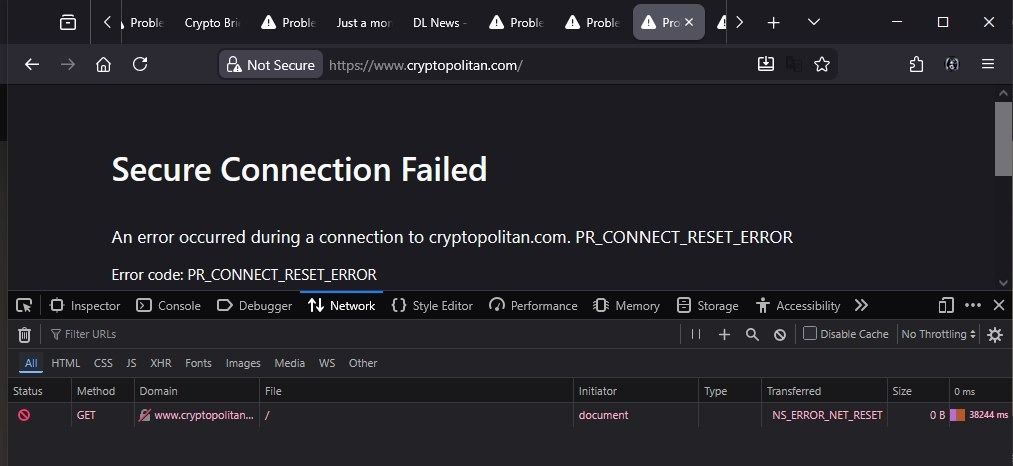
For this analysis, we selected a representative group of crypto and financial media outlets to reflect differences in language, geography, and editorial focus.
The list included Benzinga, Coinness, FastBull, FXEmpire, CoinGeek, Criptonoticias, Cointelegraph, CoinEdition, The Coin Republic, AMBCrypto, and Nada News. This is not an exhaustive list.
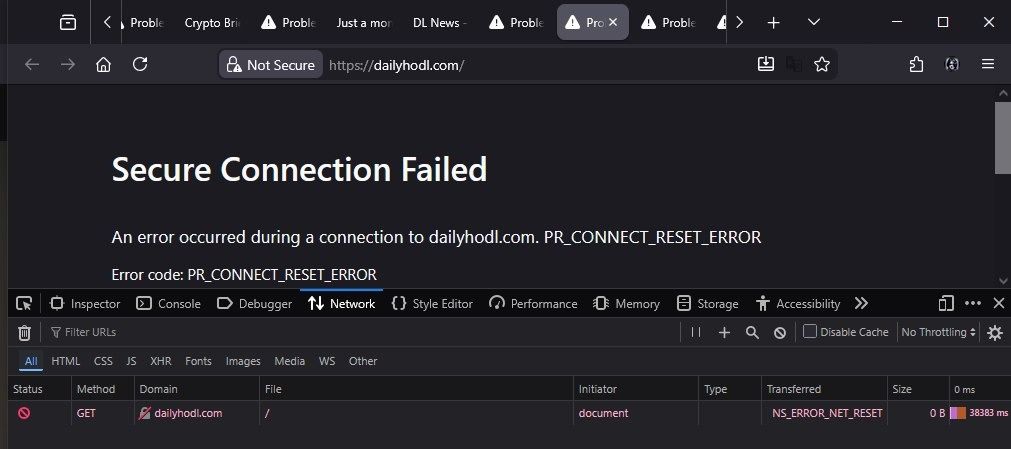
According to estimates cited by industry analysts, access restrictions may affect as many as one in four crypto and financial publications.
Notably, BeInCrypto did not experience the same access disruptions during testing. This provided a neutral comparison point when assessing whether the restrictions were selective or network-wide.
Network-level blocking is not new in Russia. Authorities already use it to restrict access to social media platforms, messaging apps, and online gaming services.
After confirming that the affected domains failed to load on domestic Wi-Fi networks, we conducted further technical checks to identify the likely enforcement method.
The tests focused on whether Deep Packet Inspection (DPI) was involved, a technique that allows telecom providers to inspect and selectively restrict internet traffic.
When we enabled a DPI circumvention tool, the previously inaccessible websites loaded without issue. This shift strongly suggests the restrictions rely on DPI-based filtering rather than DNS manipulation, server-side issues, or website outages.
To assess whether access varied by internet provider, we asked 10 crypto users across different regions to open the same websites using domestic Wi-Fi networks, without VPNs or other tools. Only two reported little to no difficulty. For the remaining participants, none of the selected sites loaded.
This pattern does not resemble a centralized shutdown. Instead, it aligns with a distributed enforcement model, where providers apply restrictions using their own technical systems and timelines.
As a result, some networks blocked access entirely, while others allowed intermittent or consistent access.
Despite these local differences, the blocking behavior was strikingly similar. Users encountered the same connection-reset errors across regions and providers.
No Record in Official Blocking Registries
We also checked whether the affected websites had been formally restricted. However, none of the domains appeared in Roskomnadzor’s public blacklist.
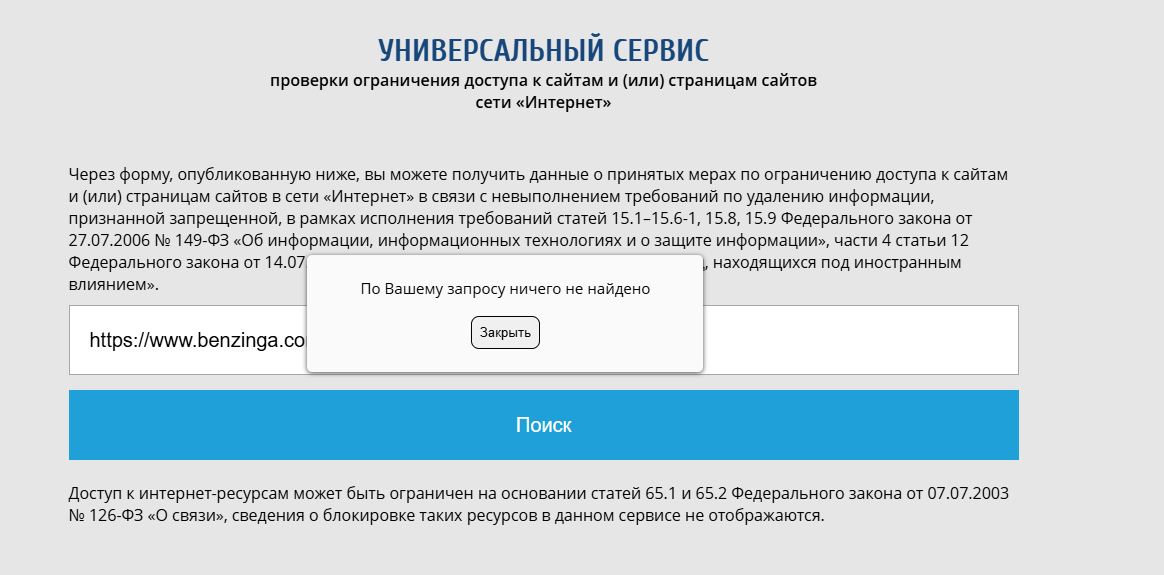
This suggests the restrictions are not enforced through standard content takedown procedures. Roskomnadzor itself notes that certain access limitations do not require public disclosure:
“Access to internet resources may be restricted under Articles 65.1 and 65.2 of Russia’s Federal Law ‘On Communications.’ Information about such restrictions is not reflected in this public registry.”
Taken together, the findings show that access to multiple crypto and financial media websites was restricted on some domestic networks but not others. The blocking occurred at the provider level rather than through a centralized shutdown.
The affected sites were absent from Roskomnadzor’s public registry, and the connection behavior remained consistent wherever restrictions appeared.
Overall, the evidence points to unevenly applied network-level access controls across Russian internet service providers.
The post Russia Quietly Blocks Several Crypto Media Sites appeared first on BeInCrypto.
Read moreLatest News