
4 Ways 2025 Has Changed the Crypto Markets Forever
The year 2025 has etched itself into the annals of financial history as the pivotal moment when crypto and digital assets transcended speculation and embedded themselves in the global economic fabric.
From boardrooms on Wall Street to policy chambers in Washington, digital assets have evolved from fringe experiments to indispensable tools for wealth preservation and innovation.
2025 Was Crypto’s Point of No Return—Here’s What Changed Forever
Institutional giants poured billions into Bitcoin, corporations built digital treasuries as hedges against inflation, meme coins danced on the razor’s edge of euphoria and oblivion, and a pro-crypto administration dismantled regulatory barriers with landmark legislation, such as the GENIUS Act.
Drawing on extensive data and insights, this article examines how these forces converged to redefine markets. It explores how they attracted billions in new capital while exposing vulnerabilities in an ecosystem that is still finding its footing.
As BeInCrypto has chronicled throughout the year, these transformations signal not just growth, but a fundamental realignment of power in the financial sector.
Institutionalization of Bitcoin
The institutionalization of Bitcoin in 2025 marked a watershed moment for crypto, transforming the volatile asset into a cornerstone of diversified portfolios.
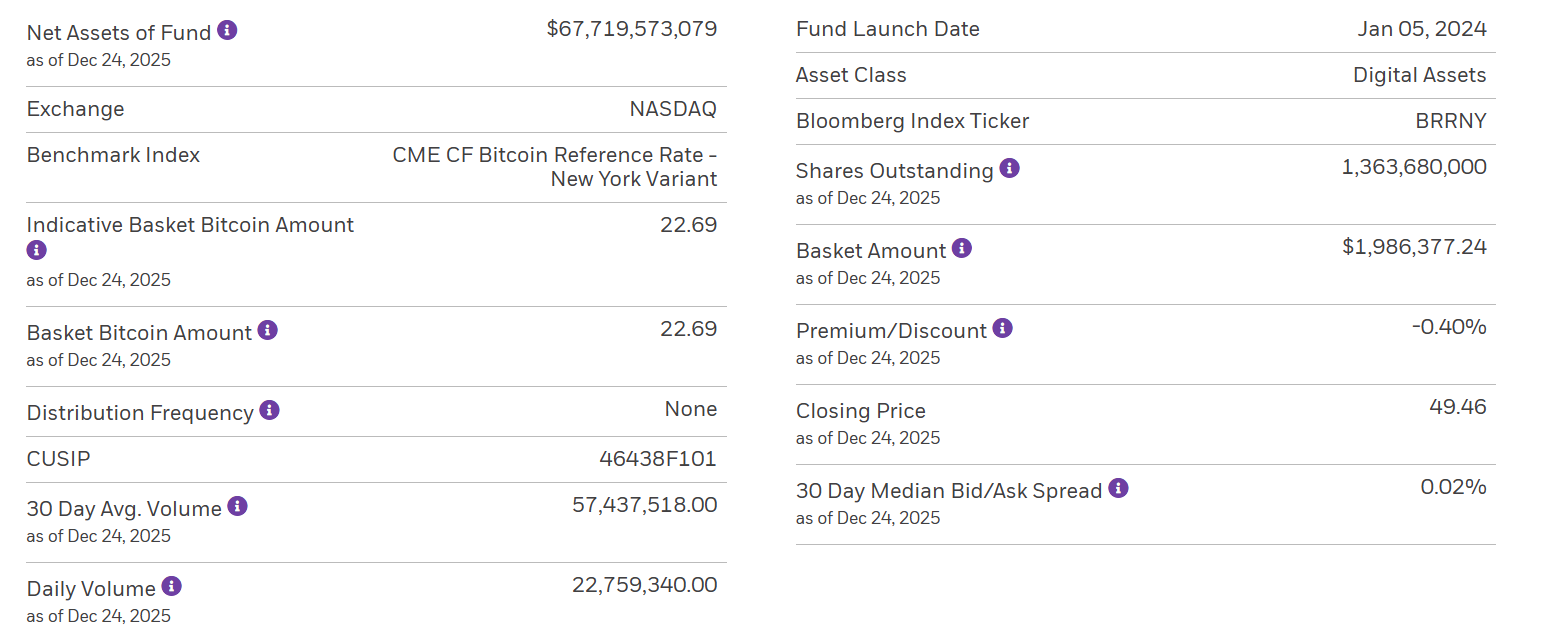
Spot ETFs matured quickly, with BlackRock’s IBIT ETF amassing nearly $68 billion in assets under management (AUM), dominating daily volumes and attracting the majority of inflows.
Institutional AUM in Bitcoin surged to $235 billion, a 161% leap from 2024, fueled by pension funds overseeing $12 trillion in assets entering the fray for the first time.
This AUM is achieved by measuring the sum of holdings between private companies, public companies, exchanges or custodians and ETFs, multiplied by the Bitcoin price.

Projections from Bursera Capital indicated inflows exceeding $40 billion, surpassing the previous year’s record, as fair-value accounting rules mitigated balance sheet volatility. This allowed corporations to hold BTC without punitive mark-to-market losses.
Regulatory clarity played a starring role, with the US establishing a strategic Bitcoin reserve and lifting restrictions on retirement plans.
Bitcoin is No Longer Fringe
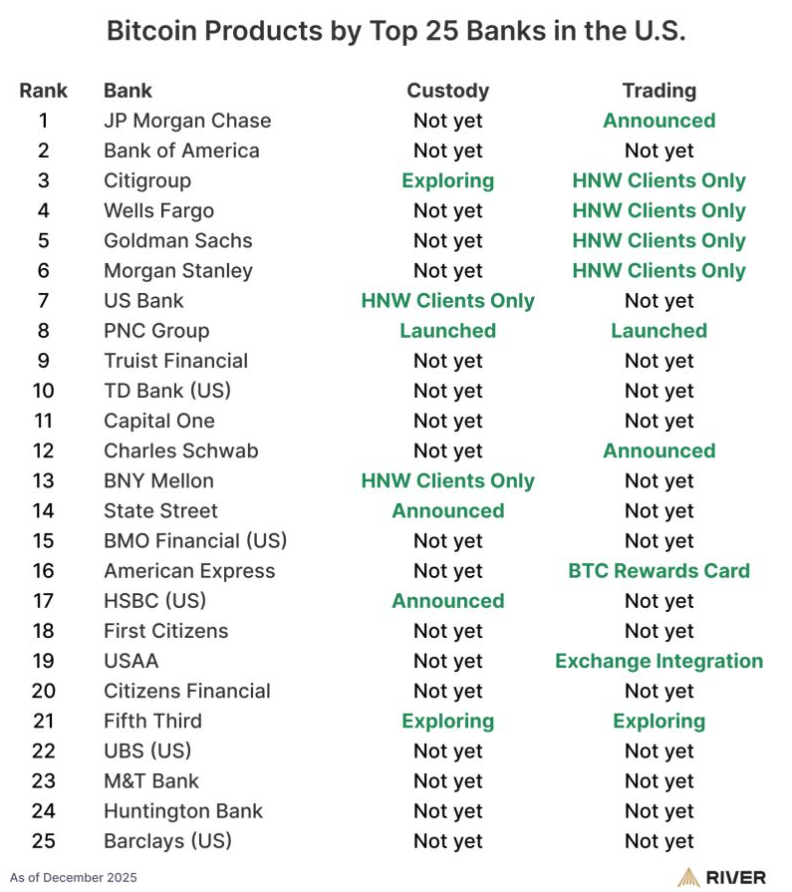
By mid-December, 14 of the top 25 US banks were developing Bitcoin products. This is according to Bitcoin financial services firm River. Meanwhile, asset managers maintained net long positions even during market dips.
An EY survey conducted earlier in the year revealed that 86% of institutional investors plan to increase their crypto holdings. DeFi exposure expected to triple from 24% to 75%. It emphasized yield generation through lending and derivatives on secure platforms, such as Fireblocks.
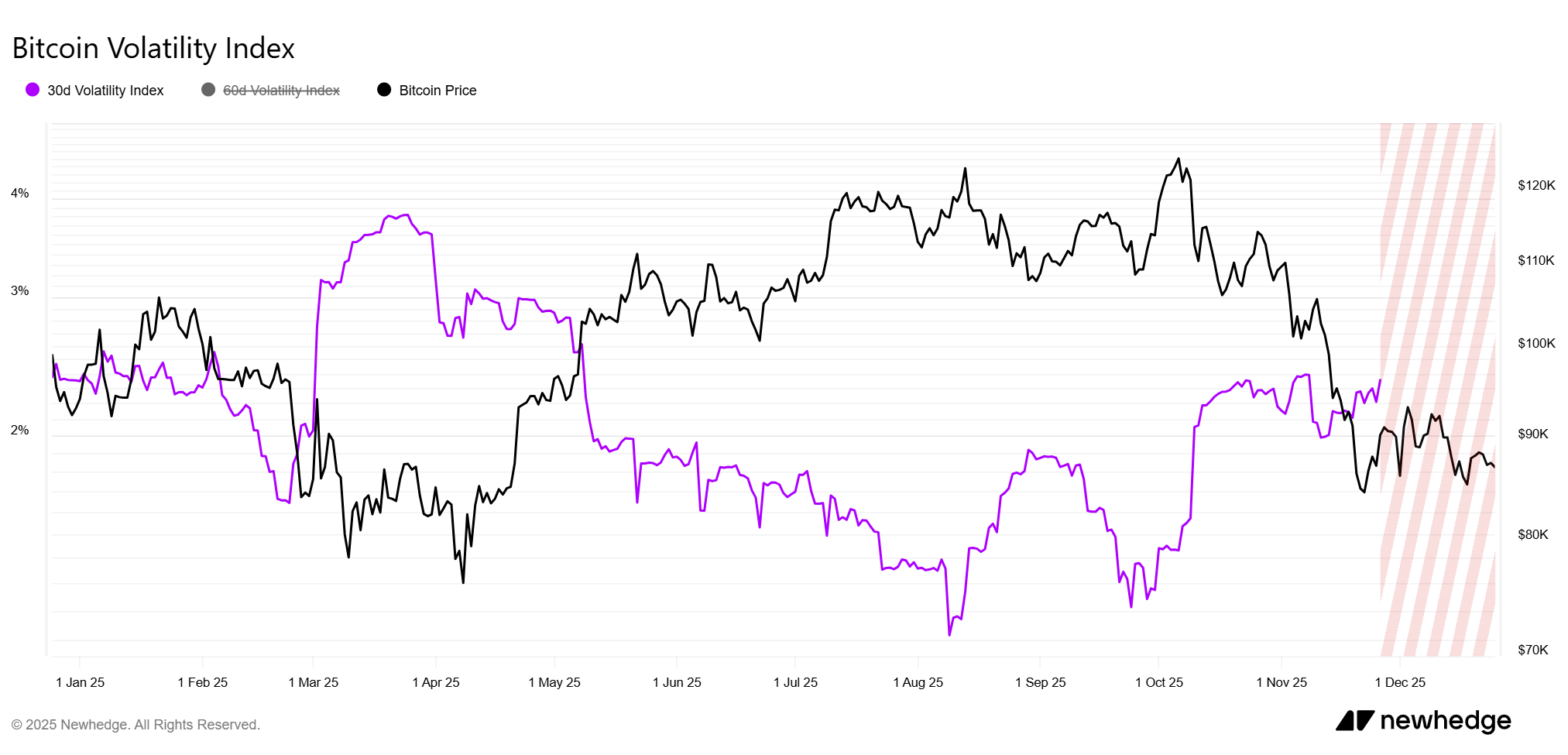
Data on Newhedge shows Bitcoin’s 30-day volatility dipped 70%, from a 2025 high of 3.81% to depths as low as 1.36% in August. This rendered it calmer than some traditional equities, while prices climbed from the $76,000 range to top out $126,000.
Analysts at firms like Standard Chartered anticipated pension-driven demand shocks, where each $1 billion in ETF inflows could propel prices higher.
According to blockchain intelligence firm Arkham, corporate Bitcoin holdings were under 600,000 BTC at the start of ,2025 but institutional interest has ramped up this year. Now, corporations hold over 4.7% of the total BTC supply.
Against this backdrop, believers like Michael Saylor of MicroStrategy say Bitcoin is no longer fringe. Rather, it is financial infrastructure. This observation echoes the sentiment at the Bitcoin 2025 Conference, where the US Vice President JD Vance’s BTC ownership and Pakistan’s national reserve were highlighted.
This institutional adoption went beyond stabilizing markets and positioned Bitcoin as a modeled reserve asset, forever altering portfolio strategies.
Digital Asset Treasuries
Digital Asset Treasuries (DATs) experienced a surge in prominence in 2025. CoinGecko data shows they accumulated over $121 billion in assets, including Bitcoin, Ethereum, and Solana. This is while controlling substantial portions of their supplies, approximately 4% of ETH and 2.5% of SOL.
Fair-value accounting catalyzed this surge, enabling corporations to allocate without balance sheet distortions; Bitwise analysts noted this could “tilt the market significantly.”
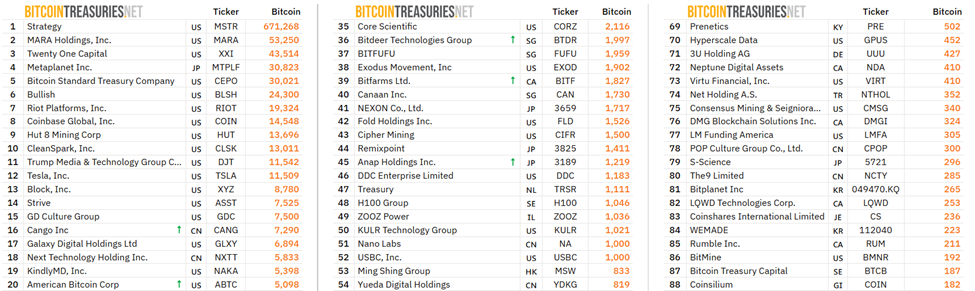
MicroStrategy exemplified the trend, holding over 671,268 BTC, as corporate accumulations rose from 1.68 million to 1.98 million BTC mid-year.
Data on Rwa.xyz shows that tokenized Treasuries increased by 80% to $8.84 billion, after reaching a peak of $9.3 billion in mid Q4. They outpaced stablecoins in terms of yield amid US rates of 3.50%–3.75%, leveraging blockchain technology for efficiency.
Real-world assets (RWAs) excluding stablecoins grew 229% to $19 billion, with Ethereum anchoring $12.7 billion in Treasuries.
Stablecoins exceeded $308 billion in market cap, according to data on DefiLlama, maturing under the GENIUS Act’s regulatory umbrella.
Forecasts from Galaxy Research painted a bullish horizon, with DAO-managed bonds potentially exceeding $500 million by 2026, and crypto-backed loans reaching $90 billion. ETF inflows were projected to exceed $50 billion, with sovereign wealth funds expected to join the influx.
Market Stress and Capitulation
However, headwinds emerged, with mNAV compression forcing some DATs to sell or shutter, as inflows plummeted 90-95% from July peaks amid scrutiny.
BeInCrypto detailed how miners and firms navigated Bitcoin buying retreats, with DAT inflows hitting 2025 lows at $1.32 billion. A $25-$75 billion demand pivot into Treasuries via stablecoins highlighted integration with debt markets.
“DATs can move beyond speculation and become lasting economic engines,” wrote analyst Ryan Watkins, highlighting their long-term implications.
This rise bridged traditional finance and crypto, but with risks. Declining liquidity and fading confidence triggered sell-offs, pressuring firms like MicroStrategy and BitMine to innovate revenue models.
Ultimately, DATs symbolized the fusion of resilience and ambition in 2025, reshaping corporate treasuries for the digital era.
Rise and Death of Meme Coins
Meme coins in 2025 embodied the crypto market’s duality: a meteoric rise followed by a stark “heat death,” with trading volumes cratering 70-85% and mindshare plummeting 90%.
The sector’s capitalization peaked above $100 billion in late 2024 but consolidated sharply. Yet, a late-year frenzy revived the narrative in September 2025. The total market cap approached $60 billion (2% of the crypto market).
AI bots and centralized exchanges (CEXs) likely amplified the pumps, with the former known to exploit thin order books and arbitrage plays.
OGs like DOGE, SHIB, and PEPE retained multi-billion caps, growing into utility hybrids amid sector maturation.
Pump.fun’s 90% volume drop signaled a pivot to utility alts, with a 2026 revival anticipated amid hype cycles. Memes captured 25% of investor interest, reimagined as “emotion futures.”
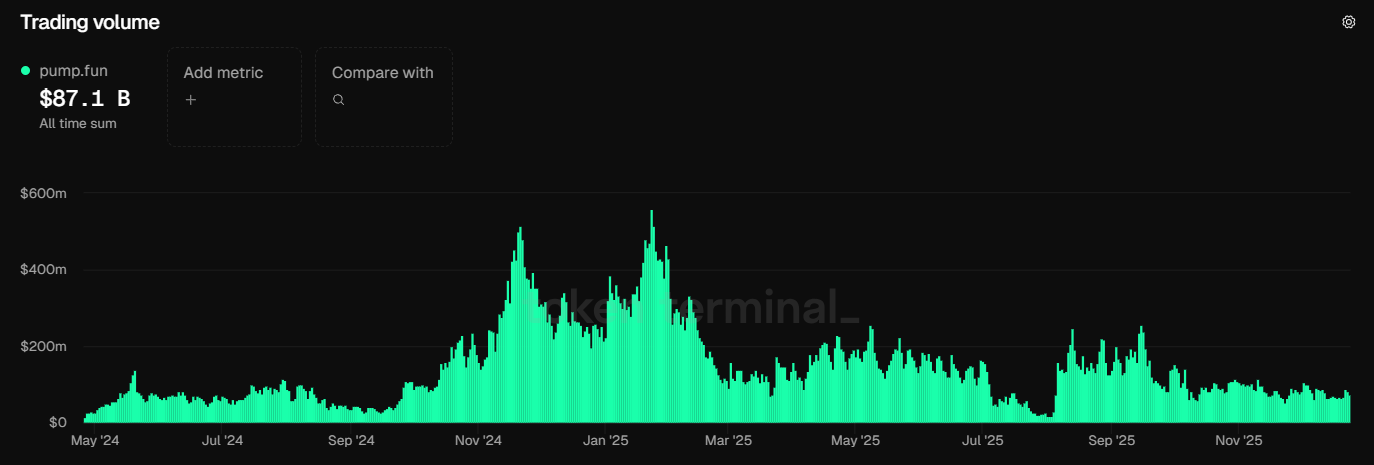
CoinGecko dashboard highlights the market cap bottoming signals and the shift from hype to utility, with nearly 2 million tokens collapsing in Q1.
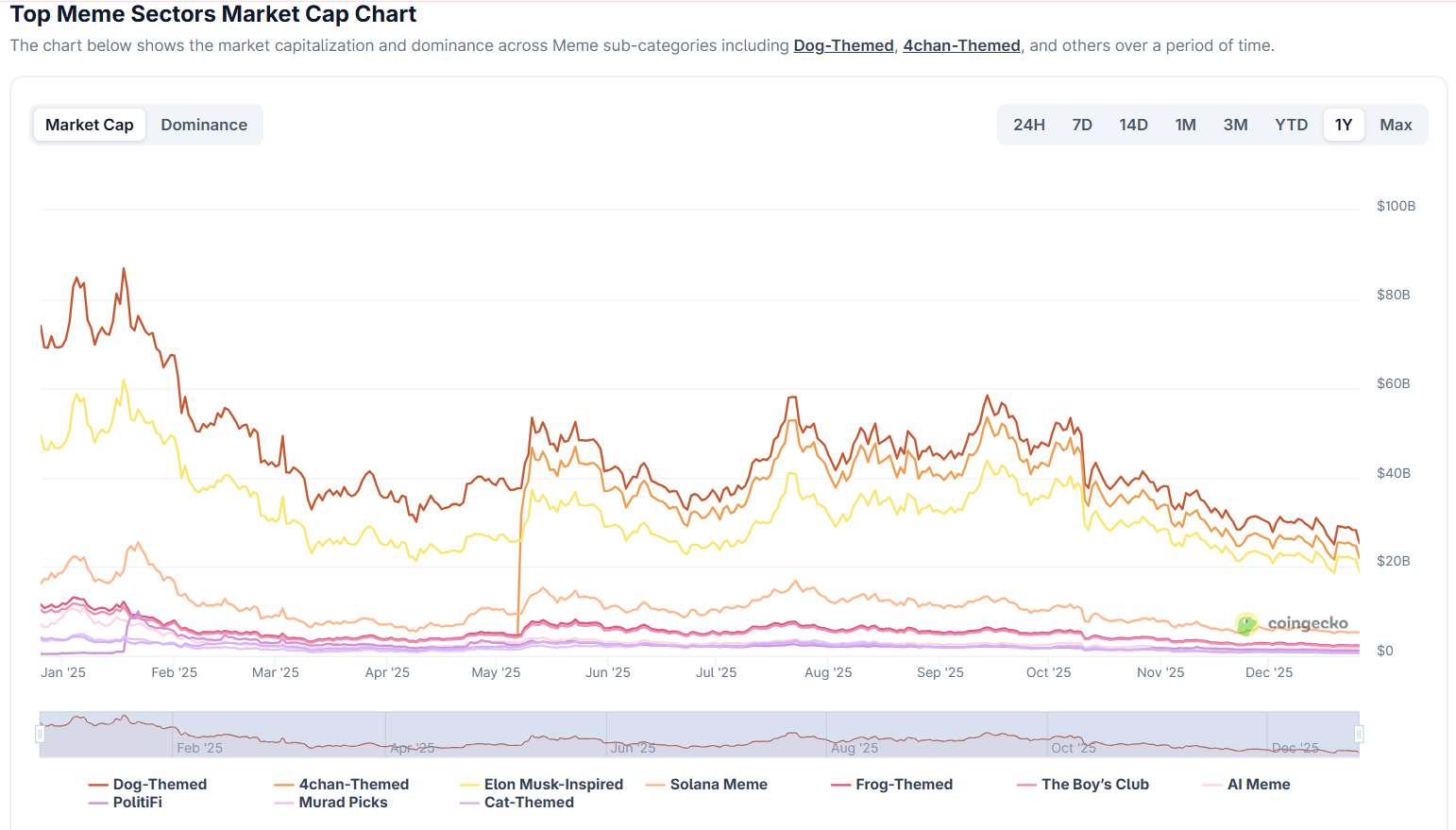
This cycle’s meme coin mania, smarter and more dangerous with AI orchestration, reflects crypto’s speculative underbelly.
Crypto President and Regulations, such as the GENIUS Act
Under President Donald Trump, dubbed the “Crypto President,” 2025 ushered in a regulatory renaissance. Among other things, it culminated in the signing of the GENIUS Act in July.
This landmark law mandated 1:1 reserve, regular audits, consumer protections, and non-securities status for stablecoins, with oversight split between the OCC and states.
Pre-passage odds reached 68%, with VP JD Vance pledging to implement tailored frameworks post-enactment. While the market structure bill stalled, leaving exchanges in limbo, GENIUS propelled the tokenization of assets forward.
Concerns over Trump’s ventures fueled fears of rejection, but the passage signified a rules-first pivot. The FDIC geared up for implementation, authorizing banks for custody. Impacts included 20-30% growth in USDC and USDT adoption, alongside issuer consolidation.
Globally, the Act inspired emerging markets, whereas the EU MiCA deemed memes to be high-risk. The FSOC’s annual report spotlighted the framework. Investor Paul Barron said the move is bullish for alts and stablecoins, it mainstreamed the sector.
BeInCrypto tracked the Act’s journey, from House passage to Treasury’s implementation delays and loopholes, such as staking yields. This regulatory thaw, from enforcement to empowerment, unlocked trillions in potential, cementing 2025 as the year crypto came of age.
In retrospect, 2025 wasn’t just a banner year for crypto. It was the inflection point where digital assets claimed their stake in the future of money.
With institutions leading the charge, treasuries fortifying balances, memes testing boundaries, and regulations providing guardrails, the markets emerged stronger, inclusive, and inevitable.
As we gaze toward 2026, the lessons of this transformative epoch remind us: in crypto, evolution is survival.
The post 4 Ways 2025 Has Changed the Crypto Markets Forever appeared first on BeInCrypto.
Read moreLatest News